

Hip Physiotherapy Erina & Central Coast
Hip pain has a habit of making itself known in the small, ordinary moments — rolling over in bed, getting out of a low car, the last few steps of a long walk, or that first push off the couch after sitting for a while. It's rarely dramatic at first, which is exactly why so many people put up with it far longer than they need to.
At Thrive Physiotherapy in Erina, we see hip pain in runners and walkers whose training has quietly outpaced their hip's capacity, tradies and gardeners managing years of cumulative load, weekend sportspeople who've felt a sharp grab in the groin, older patients whose hip has simply changed with age, and new parents whose hips are adjusting to the demands of carrying a baby around all day. Whatever brought you in, the approach is the same: work out exactly which structure is under strain, and build a realistic plan around it.
The hip is a genuinely robust, well-designed joint, built to carry your full body weight through decades of walking, running, and everyday movement. Persistent hip pain doesn't usually mean something is fundamentally broken — far more often it reflects a specific structure that's become overloaded, irritated, or under-strengthened, and that responds very well once we identify exactly what's going on.
Some hips need a handful of sessions and a well-targeted loading program to settle. Others, particularly longer-standing tendon issues or joint-related conditions, need a more structured, longer-term process. Either way, you'll leave your first appointment with a clear working diagnosis and a genuine plan, not just a label for your pain and a vague suggestion to rest.
Understanding Your Hip
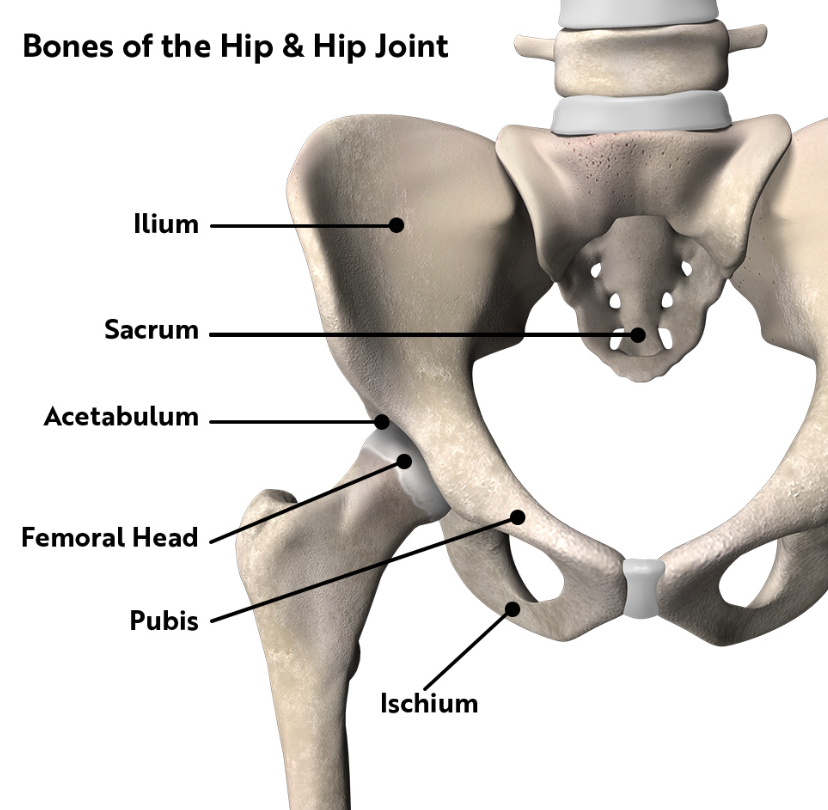
The hip is a ball-and-socket joint, where the rounded head of your femur sits within the socket of your pelvis, called the acetabulum. A ring of cartilage called the labrum deepens the socket slightly and helps create a secure seal around the joint, while a deep layer of cartilage cushions the bones themselves. This design gives the hip an excellent combination of stability and a genuinely large range of movement, letting you walk, run, squat, and rotate through a huge variety of positions.
A large group of muscles surrounds the hip and does a huge amount of work throughout the day. The gluteal muscles on the outside of the hip control side-to-side stability and are central to conditions like gluteal tendinopathy and trochanteric bursitis. The hip flexors at the front, including iliopsoas, lift your leg and are behind many anterior hip and groin complaints. The adductors on the inside of the thigh, and deep rotator muscles like piriformis toward the back of the hip, round out a genuinely complex system of muscles all working together to keep your
Common Hip Conditions We Treat
Hip pain can come from several different structures, and it's common for more than one to be contributing at once. Here are seven of the conditions we see most often at our Erina clinic.
Gluteal Tendinopathy
This is one of the most common causes of lateral hip pain we see, particularly in people over 40 and more often in women. It involves an overload injury to the gluteal tendons where they attach to the bony point on the outside of the hip, usually developing gradually rather than from one specific incident. It's often aggravated by lying on the affected side, standing on one leg, or walking up hills and stairs, and tends to build over weeks or months before people decide to get it looked at, since the pain can disturb sleep and make everyday tasks like getting dressed genuinely uncomfortable. It responds very well to a properly structured loading program.
Learn more: Gluteal Tendinopathy →
Trochanteric Bursitis
The trochanteric bursa is a small fluid-filled sac that sits between the gluteal tendons and the bony point on the outside of the hip, helping reduce friction as the tendons glide over the bone. When it becomes inflamed — often from a direct knock, a fall onto the hip, or repeated pressure from lying on that side — it can produce a sharper, more localised pain than the gradual ache typical of tendinopathy. It frequently develops alongside gluteal tendinopathy rather than as a completely standalone problem, so part of our assessment is working out how much each structure is contributing to your particular presentation.
Learn more: Trochanteric Bursitis →
Hip Osteoarthritis
A gradual wearing of the cartilage within the hip joint, most common in people over 50 and often more noticeable after periods of activity or in cold weather. It typically causes a deep ache in the groin or buttock, along with stiffness and a reduced range of movement, particularly with rotating the hip, such as putting on socks or getting in and out of a car. While it can't be reversed, the right management makes a genuine difference to pain, stiffness, and day-to-day function, and most people manage it well long-term without needing surgery.
Learn more: Hip Osteoarthritis →
Hip Impingement (FAI) & Labral Tears
Femoroacetabular impingement occurs when extra bone at the hip joint causes repeated pinching between the ball and socket during certain movements, which can gradually irritate or tear the labrum, the ring of cartilage that lines the hip socket. It's common in younger, active people, particularly those in sports involving repetitive hip flexion and rotation like football, hockey, and dancing, and typically causes deep groin pain with sitting, squatting, or twisting movements, sometimes with a catching or clicking sensation.
Learn more: Hip Impingement (FAI) & Labral Tears →
Hip Flexor Strain (Iliopsoas Tendinopathy)
The hip flexors, particularly iliopsoas, can become strained or irritated from repetitive or forceful hip flexion — think kicking sports, sprinting, or a sudden increase in running volume. It causes pain at the front of the hip or groin, often worse with lifting the knee toward the chest or during the push-off phase of walking and running, and can also flare with prolonged sitting in people whose hip flexors have become tight and overloaded from long desk hours followed by intense weekend activity.
Learn more: Hip Flexor Strain (Iliopsoas Tendinopathy) →
Piriformis Syndrome
The piriformis is a small deep muscle in the buttock that can become tight or irritated, sometimes compressing the nearby sciatic nerve as it passes close by. This produces a deep buttock ache, sometimes with symptoms radiating down the back of the leg, that can closely mimic sciatica from the lower back, which is why an accurate diagnosis matters. It's often aggravated by prolonged sitting, particularly on hard surfaces or with a wallet in a back pocket, and by activities involving repetitive hip rotation.
Learn more: Piriformis Syndrome →
Adductor-Related Groin Pain (Groin Strain)
The adductor muscles on the inside of the thigh are frequently strained in sports involving sprinting, kicking, or rapid changes of direction, such as football and soccer. It causes pain in the groin or inner thigh, often sharp with a sudden movement and then achy afterward, and can range from a mild strain through to a more significant tear depending on the mechanism of injury. It's also one of the more common injuries to become a recurring problem if the return to sport is rushed before adequate strength has been rebuilt.
Learn more: Adductor-Related Groin Pain (Groin Strain) →
Common Hip Symptoms
People describe hip pain in all sorts of ways, and the specific location and pattern of symptoms often tells us a lot before we've even begun the physical assessment. It's rarely just ‘my hip hurts’ — it's usually a fairly specific combination of the following:
Pain on the outside of the hip, particularly lying on that side at night
Deep groin pain, especially with sitting, squatting, or getting out of a car
Stiffness in the hip, particularly first thing in the morning
A deep buttock ache, sometimes radiating down the back of the leg
Pain in the inner thigh or groin, particularly with sport involving sprinting or kicking
A catching, clicking, or locking sensation in the hip
Pain that worsens with walking up hills, stairs, or after a longer walk
Pain that started after a specific movement, a fall, or a sudden increase in activity
A limp, or a noticeable change in your normal walking pattern
You don't need to know exactly which structure is involved before booking in — that's exactly what your assessment is for. But if any of the above sounds familiar, particularly if it's affecting your walking or sleep, it's worth getting a proper assessment rather than just waiting to see what happens.
Because the hip sits at the crossroads between your spine, pelvis, and leg, pain here can sometimes be harder to pin down than in more straightforward joints — a problem at the hip can mimic lower back pain, and vice versa. Understanding exactly which structure is under strain, and why, is the first step to actually fixing it rather than just guessing.
It's also worth knowing that the hip absorbs several times your body weight with every stride when running, and a meaningful multiple of your body weight even with normal walking. That cumulative load, repeated tens of thousands of times a week, is part of why gradual overload — rather than one single dramatic injury — is behind so many of the hip conditions we see.
How We Assess Hip Pain
Your first appointment starts with a thorough conversation about how your pain started, what your work, sport, and daily activities actually involve, and what's been aggravating things. That context often narrows down the likely cause considerably before we've even started the physical assessment, particularly given how many different structures can produce hip pain.
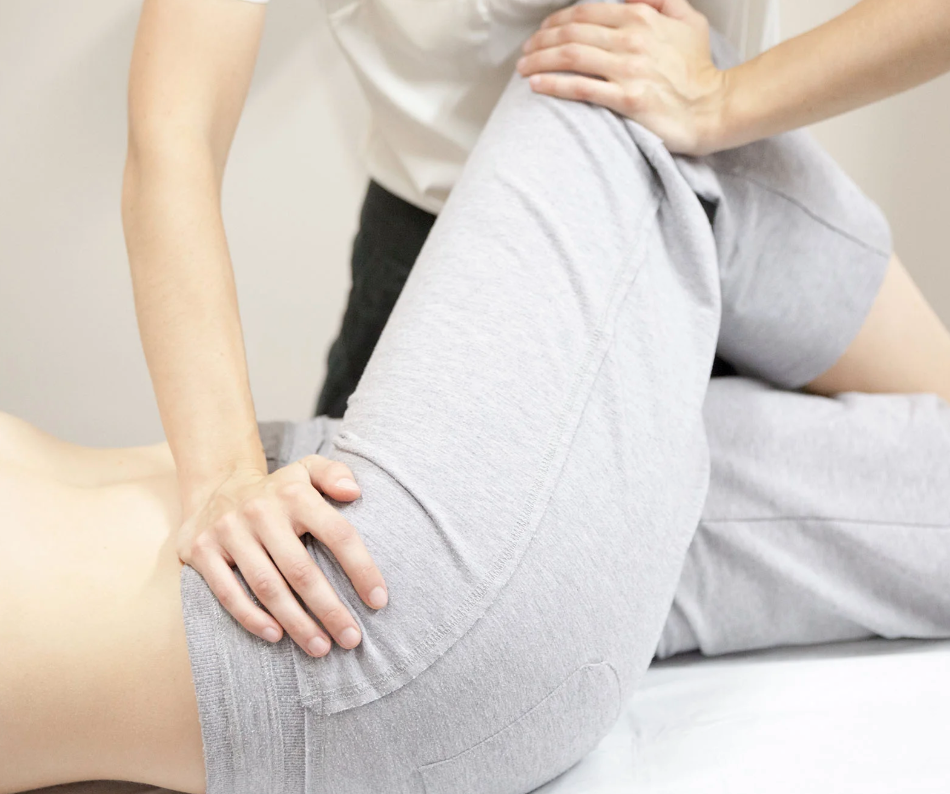
From there, we move into a hands-on assessment of your hip's movement, strength, and a series of specific tests that help pinpoint exactly which structure is involved — whether that's the joint itself, a tendon, a muscle, or occasionally a referred pattern from the lower back. We'll also check your lower back and pelvis, since problems in these areas can refer pain into the hip or contribute to ongoing overload, and addressing only the hip without looking at the whole kinetic chain can leave part of the problem untreated.
In most cases, imaging isn't required initially. A thorough clinical assessment identifies the likely cause in the large majority of presentations, and we reserve imaging for cases that aren't progressing as expected, where the clinical picture isn't clear, or where the findings would genuinely change the management plan. By the end of your first session, you'll have a working diagnosis, a clear explanation of what's driving your symptoms, and a first set of exercises or advice to start on straight away.
How Physiotherapy Helps
Treatment is built around what's actually driving your specific pain. For tendon-related conditions like gluteal tendinopathy and hip flexor strain, this usually means a progressive loading program designed to rebuild the tendon's tolerance, combined with activity and position modification while things settle. For trochanteric bursitis, early management focuses more on calming the acute inflammation and reducing direct pressure on the area, before shifting toward the same strengthening principles used for tendinopathy once the irritability has settled. For joint-related conditions like osteoarthritis and hip impingement, treatment focuses on optimising strength and movement quality around the joint to reduce symptoms and improve function.
For muscle strains like adductor and piriformis-related pain, we'll guide you through a structured return to activity that respects the tissue's healing timeframe while keeping you as functional as possible throughout. In every case, we'll give you a realistic home program and practical advice on modifying training, work, or daily habits that are contributing to ongoing overload, since addressing the underlying cause matters just as much as calming the current flare-up.
None of this is a quick, one-session fix. Hip tendons and joints in particular need time and consistent loading to rebuild capacity, and rushing this process is one of the most common reasons hip pain becomes a repeat visitor rather than something that resolves properly. We'll be upfront with you about roughly how many sessions we expect you'll need and what progress should look like along the way.
Preventing Hip Pain From Coming Back
Once your hip has settled, the priority shifts to keeping it that way. Ongoing strength in your glutes, deep hip stabilisers, and core is one of the best-supported ways to reduce the risk of a repeat flare-up, along with sensible pacing of any increases in walking, running, or training volume.
For runners and sportspeople, gradual, well-planned progressions in training load — rather than sudden jumps in distance, intensity, or a new activity altogether — make a genuine difference to how resilient your hip stays over time. For older patients managing osteoarthritis, staying consistently active with an appropriate maintenance program tends to matter more for long-term function than any single treatment.
We'll talk you through exactly what an ongoing maintenance plan looks like for your specific hip and lifestyle before you finish your course of treatment, so you're not left guessing about what to keep doing once regular sessions wrap up.
Hip Recovery Timeframes
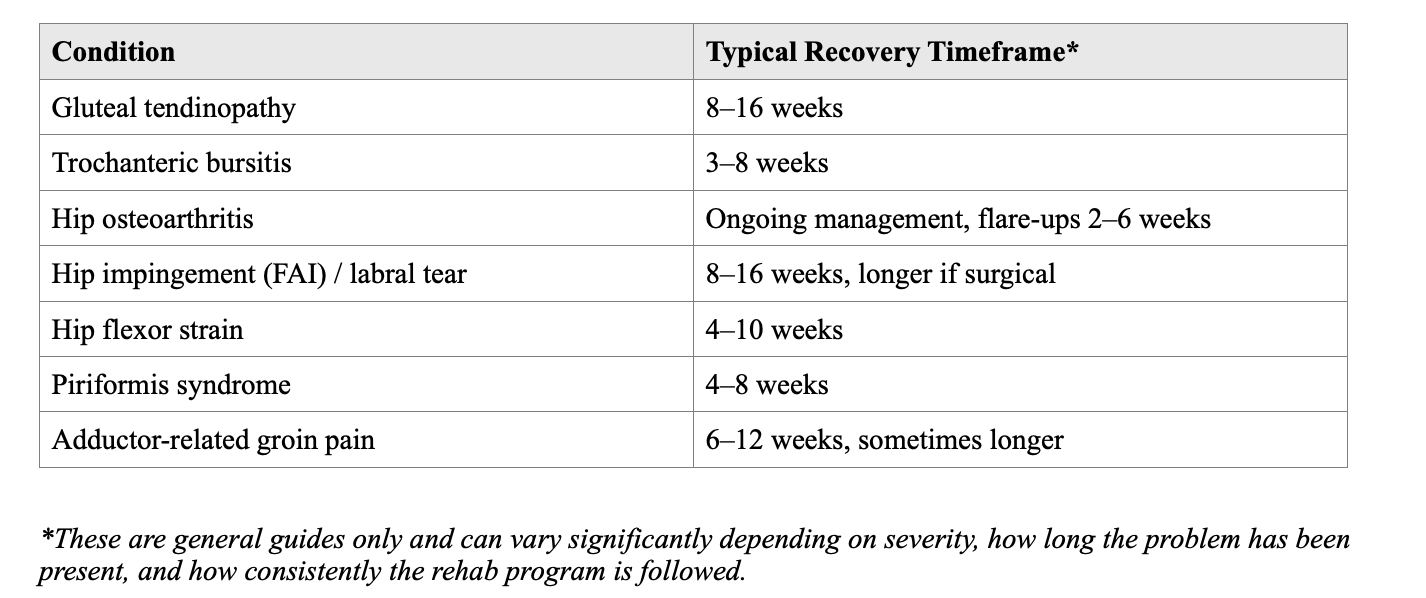
Every hip is different, but these general ranges give you a rough idea of what to expect. Your physiotherapist will give you a more accurate timeframe once we understand your specific diagnosis.
Why Choose Thrive Physiotherapy
We're a local team based right here in Erina, and hip pain is one of the conditions we treat most often — from runners and weekend sportspeople to older patients wanting to stay active and independent. We take the time to explain what's actually going on with your hip in plain language and build a plan around your goals, not a generic handout.
Whether your hip pain is brand new or something you've been managing around for years, our approach stays the same: a proper assessment, an honest explanation, and a plan that's realistic for your life — not just an idealised version of it. If something isn't improving the way we expected, we'll say so and adjust the plan rather than quietly continuing on regardless.
We also keep a close eye on the things that get missed elsewhere — how your lower back and pelvis are moving, whether your glutes are doing their share of the work, and whether pain has started to change how you're walking or training more broadly. Hips rarely operate in isolation, and treating the whole picture is usually what separates a quick fix from a lasting one.
Frequently Asked Questions
Do I need a referral to see a physiotherapist for hip pain?
No, you can book directly with us. If you're being treated under a specific plan such as an EPC or WorkCover claim, bring any paperwork along and we'll help you sort out the details.
Will I need a scan for my hip pain?
Usually not initially. Most hip conditions can be diagnosed clinically, and imaging is reserved for cases where it's likely to change the treatment plan or where recovery isn't progressing as expected.
Can I keep running or playing sport while my hip heals?
In most cases, yes, with some modification. We'll help you identify which specific movements or volume to adjust rather than telling you to stop everything.
I've been told I have a labral tear — does that mean I need surgery?
Not necessarily. Many labral tears are managed successfully with a structured physiotherapy program, and surgery is generally reserved for cases that don't respond adequately to conservative management.
How many sessions will I need?
It depends entirely on the condition and how long it's been going on. Some hips settle in a handful of sessions; others, particularly tendon or joint-related presentations, need a longer-term plan. We'll give you an honest estimate after your first visit.
Can lower back pain cause hip pain, or vice versa?
Yes, sometimes. The hip and lower back are closely connected, and problems in one area can refer pain into the other, which is part of why we assess the whole region rather than just the hip in isolation.
Why does my hip hurt more the morning after activity?
Tendons and joints often react with a delayed flare rather than pain during the activity itself, so soreness the next morning is a very typical pattern rather than a sign something new has gone wrong.
Is it bad to keep walking with hip pain?
In most cases, no — appropriate walking is generally well tolerated and helpful, though we'll help you identify if a specific pattern, like hill walking or very long distances, needs temporary adjustment.
Book Your Hip Assessment
If hip pain is affecting your walking, your sleep, or the activities you enjoy, don't wait for it to get worse. The longer it's left, the more it tends to affect strength and movement patterns more broadly, which can make recovery slower than it needed to be.
Book an appointment with our Erina team and let's work out exactly what's going on — and what to do about it. Most people are relieved to finally have a clear explanation, rather than continuing to guess at what's wrong and hoping it settles on its own.