

Hip Flexor Strain Physiotherapy — Erina & Central Coast
Pain at the front of your hip or groin, particularly when lifting your knee toward your chest or pushing off during a run, often points to the hip flexors — most commonly iliopsoas, the deep muscle group responsible for lifting your leg. It's a common complaint in runners, kicking-sport athletes, and anyone who's had a sudden increase in ac
What Is a Hip Flexor Strain?
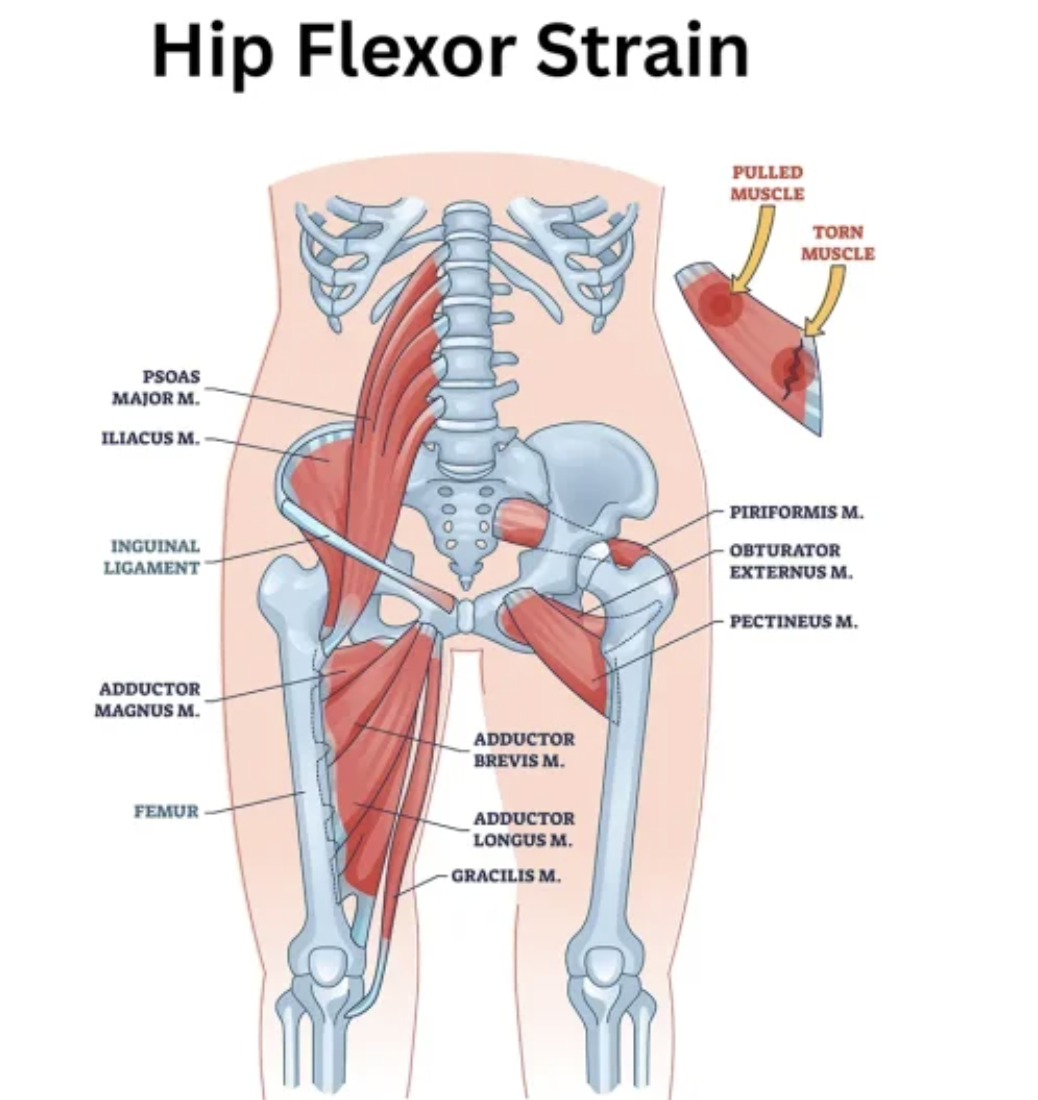
The hip flexors, particularly iliopsoas, run from your lower spine and pelvis down to the top of your femur, and are responsible for lifting your thigh toward your body. A strain describes an overload injury to this muscle-tendon unit, ranging from mild irritation through to a more significant tear, depending on the mechanism and severity of the injury.
Chronic, lower-grade irritation — sometimes better described as hip flexor tendinopathy rather than an acute strain — is also common, particularly in people who spend long hours sitting with the hip flexors in a shortened position, followed by bursts of intense activity that the tendon isn't well conditioned for.
What Causes It?
Acute strains often occur during sprinting, kicking, or a sudden forceful hip flexion movement, common in football, soccer, and athletics. Gradual, overuse-related irritation is more common in runners who've increased their volume or hill running too quickly, and in people whose long desk hours followed by intense weekend activity leave the hip flexors under-conditioned for what's being asked of them. Dancers and martial artists, who often combine flexibility with powerful hip flexion movements, are another group we see this in regularly.
Common Symptoms
Pain at the front of the hip or groin
Pain worsened by lifting the knee toward the chest, such as climbing stairs
Discomfort during the push-off phase of walking or running
Pain or tightness with prolonged sitting, and sometimes on first standing up
In more significant strains, swelling or bruising at the front of the hip
How We Diagnose It
Assessment includes specific strength and stretch tests for the hip flexors, along with palpation to help localise the affected area. We'll also look at your training or activity history to understand what's likely driving the overload. Imaging is occasionally used for more significant injuries or if there's uncertainty about the diagnosis, but most cases are identified clinically.
How Physiotherapy Helps
For acute strains, early management focuses on protecting the area appropriately while avoiding complete rest, followed by a progressive return to loading as symptoms allow. For more chronic, tendinopathy-type presentations, treatment centres on a structured loading program to rebuild the tendon's capacity, combined with addressing any contributing factors like prolonged sitting postures or a training program that's outpaced the hip flexor's current tolerance.
For sport-specific presentations, we'll work through a graded return-to-sport program that respects healing timeframes while progressively reintroducing sprinting, kicking, and other demanding movements, so you return to full training and competition with confidence rather than a lingering worry about re-injury.
Self-Care While You Wait For Your Appointment
Reducing activities that involve forceful or repetitive hip flexion — sprinting, kicking, or high knee lifts — will help in the short term. Ice can be useful for a recent, more acute strain, while gentle movement within a comfortable range is generally fine and helps prevent excessive stiffness while you wait for your assessment.
Frequently Asked Questions
How long does a hip flexor strain take to heal?
Mild strains often improve within four to six weeks, while more significant strains or chronic tendinopathy can take longer, sometimes up to ten weeks or more with a proper rehab program.
Can I keep running with a hip flexor strain?
It depends on severity. Milder cases may tolerate modified running, while more significant strains usually need a period of reduced load before a structured return to running.
Is stretching or strengthening more important for hip flexor pain?
Both have a role, but strengthening through a gradual, well-dosed loading program tends to matter more for genuine recovery than stretching alone, particularly for more persistent, tendinopathy-type presentations.
Why does my hip flexor hurt more after sitting?
Prolonged sitting keeps the hip flexors in a shortened position, and standing up afterward suddenly lengthens and loads them, which can bring on discomfort, particularly in a hip flexor that's already irritated or under-conditioned.
Book a Hip Assessment in Erina
If a hip flexor strain is getting in the way of walking, sport or everyday life, the sooner it's properly assessed, the sooner we can get you moving with confidence again. Our Erina team will give you a clear diagnosis, an honest treatment plan, and a realistic timeframe — no guesswork, no generic exercise sheets.
Call Thrive Physiotherapy or book online today to get started.
Not sure if this is what's causing your hip pain? Visit our Hip Physiotherapy hub page to see the full range of hip conditions we treat.