

Hip Osteoarthritis Physiotherapy — Erina & Central Coast
A deep ache in the groin or buttock, along with stiffness that makes putting on socks or getting out of a low chair harder than it used to be, often points to hip osteoarthritis. It's a genuinely common and manageable condition, and while it can't be reversed, the right approach makes a real difference to how it affects your daily life.
What Is Hip Osteoarthritis?
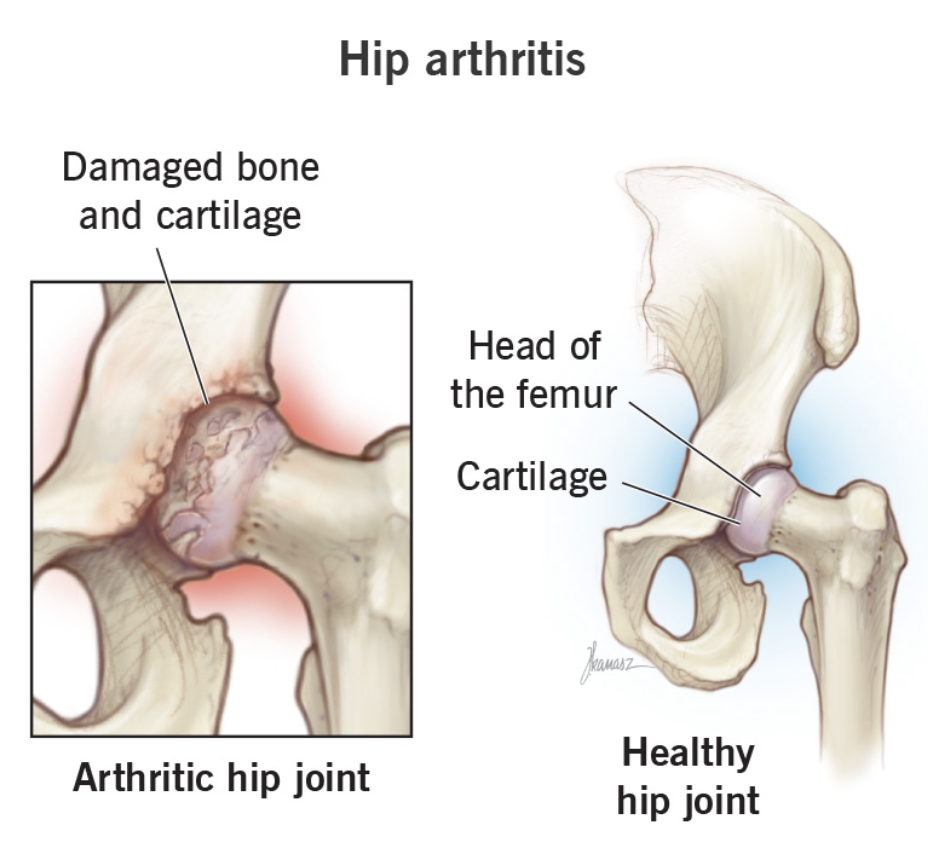
Osteoarthritis involves gradual wear of the cartilage that cushions the hip joint, along with changes to the surrounding bone and joint lining over time. This can lead to pain, stiffness, and a reduced range of movement, particularly with rotating the hip. It tends to develop gradually over years and becomes more common with age, though the degree of change on an X-ray doesn't always match how much pain or limitation someone actually experiences.
This last point is worth genuinely taking on board — some people with quite significant changes on imaging have relatively mild symptoms, while others with milder imaging findings are more limited in their daily function. It's part of why we focus so heavily on your actual movement, strength, and goals during assessment rather than treating a scan report as the whole story.
What Causes It?
Hip osteoarthritis is more common in people over 50, and risk is increased by previous hip injury, developmental hip conditions from childhood, family history, and higher body weight, which increases load through the joint over time. Occupations or sports involving heavy or repetitive loading of the hip can also contribute to changes developing earlier than they otherwise might.
Common Symptoms
A deep ache in the groin, buttock, or outer hip
Stiffness, particularly first thing in the morning or after sitting
Difficulty with rotation-based tasks like putting on socks or shoes
A grinding or catching sensation with hip movement
Pain that worsens with prolonged walking or standing
How We Diagnose It
Diagnosis is based on your history, the pattern of your symptoms, and a hands-on assessment of your hip's movement, particularly rotation, which is often the most restricted and telling direction. X-rays can help confirm the diagnosis and give a sense of severity, though we focus heavily on your actual function and goals rather than the image alone, since these don't always correlate closely.
How Physiotherapy Helps
While osteoarthritis can't be reversed, physiotherapy makes a genuine difference to how it affects your day-to-day life. Treatment typically includes a targeted strengthening program for the muscles supporting the hip, particularly the glutes, along with gentle range of motion work to manage stiffness and practical strategies for pacing activities to reduce flare-ups without unnecessarily limiting what you do.
We'll also help you understand your specific flare-up pattern — what tends to aggravate things and what settles them — so you have a clear, practical plan for managing symptoms yourself between flare-ups. For more advanced or persistent cases significantly affecting function, we can discuss further options with your GP, including referral to a specialist if joint replacement becomes a relevant conversation down the track.
Many people are surprised at how much improvement is possible with a consistent strengthening program, even with imaging showing significant joint changes. Strength and movement quality, rather than the joint's appearance on a scan, tends to be the bigger driver of how well someone actually functions day to day.
Self-Care While You Wait For Your Appointment
Gentle, regular movement tends to help more than rest for arthritic joints, even though it can feel counterintuitive when the joint is stiff and sore. Heat can be helpful for easing morning stiffness, while ice is often more useful after a flare-up from overuse. Pacing heavier or repetitive tasks across the day, rather than doing them all at once, can also help reduce the intensity of flare-ups.
Frequently Asked Questions
Can hip osteoarthritis be cured?
No, but it can be well managed. Most people maintain good function and manageable pain levels long-term with the right combination of strengthening, activity pacing, and flare-up management.
Will exercise make my arthritis worse?
The right type and amount of exercise generally helps rather than harms an arthritic joint, by maintaining strength and movement. We'll guide you on what's appropriate for your specific hip.
Will I eventually need a hip replacement?
Not necessarily. Many people manage well long-term without surgery. It's occasionally considered for more advanced cases significantly affecting function and quality of life, and we can help guide that conversation if it becomes relevant.
Book a Hip Assessment in Erina
If hip osteoarthritis is getting in the way of walking, sport or everyday life, the sooner it's properly assessed, the sooner we can get you moving with confidence again. Our Erina team will give you a clear diagnosis, an honest treatment plan, and a realistic timeframe — no guesswork, no generic exercise sheets.
Call Thrive Physiotherapy or book online today to get started.
Not sure if this is what's causing your hip pain? Visit our Hip Physiotherapy hub page to see the full range of hip conditions we treat.