

Gluteal Tendinopathy Physiotherapy — Erina & Central Coast
If the outside of your hip has become sore to lie on, aches after walking up hills, or has gradually become tender to the touch, there's a good chance you're dealing with gluteal tendinopathy. It's one of the most common causes of lateral hip pain we see at Thrive Physiotherapy in Erina, particularly in people over 40, and it responds very well to the right structured rehab.
What Is Gluteal Tendinopathy?
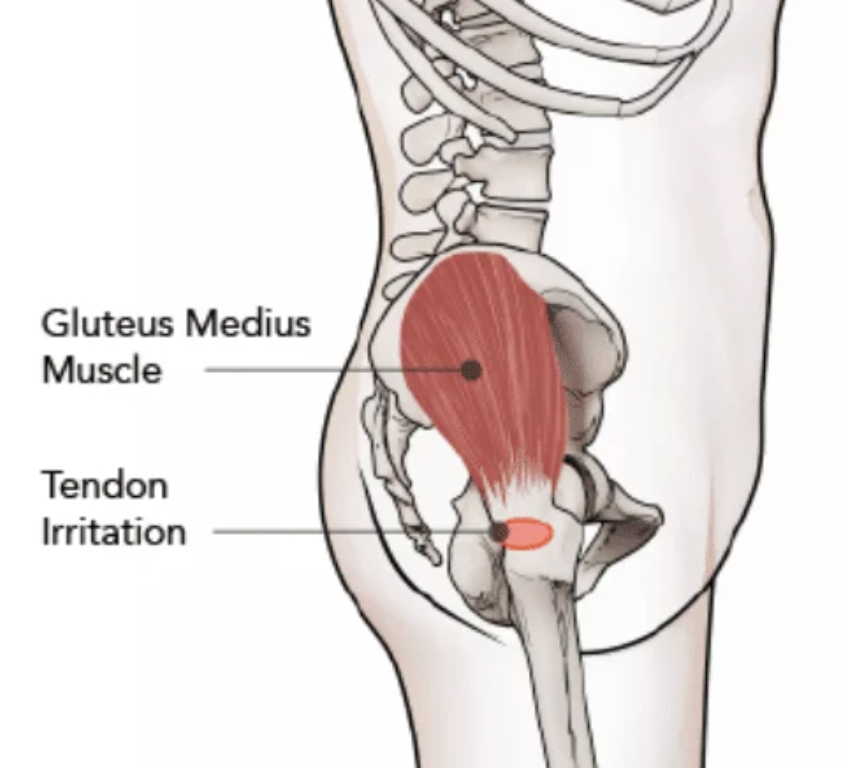
Gluteal tendinopathy describes an overload injury to the gluteal tendons where they attach to the greater trochanter, the bony point you can feel on the outside of your hip. It's now understood to be the primary driver behind most cases of persistent lateral hip pain, a condition that was once attributed mainly to bursitis but is now recognised as being, in the large majority of cases, a tendon problem first.
Like other tendon conditions, it reflects the gluteal tendons being asked to do more than they can currently tolerate, rather than a sign of structural damage that can't be recovered from. With the right progressive loading, most people see a genuine and lasting improvement, even if the condition has been present for months or years before finally being properly assessed.
What Causes It?
Gluteal tendinopathy is more common in women, particularly after age 40, and is often linked to compressive positions that load the tendon directly — crossing the legs, standing with weight shifted onto one hip, or sleeping on the affected side. A sudden increase in walking, particularly hill walking, or a change in exercise routine can also trigger a flare-up in a tendon that wasn't quite ready for the extra load. Weakness in the surrounding gluteal muscles is a common underlying contributor, since the tendon ends up compensating for muscle groups that aren't pulling their weight.
Common Symptoms
A gradual ache on the outside of the hip, over the bony point
Pain lying on the affected side at night
Discomfort standing on one leg, such as climbing stairs or getting dressed
Pain that worsens with walking, particularly uphill or for longer distances
Tenderness to direct touch over the outside of the hip, without significant swelling
How We Diagnose It
Diagnosis is generally clinical, based on the location of your pain, your history, and specific tests that load the gluteal tendons to reproduce your symptoms, such as standing on one leg for a period or resisted hip movements. Imaging isn't usually necessary to confirm the diagnosis, though it can occasionally help distinguish tendinopathy from bursitis or rule out other causes of lateral hip pain if the clinical picture isn't entirely clear.
How Physiotherapy Helps
Treatment centres on a progressive loading program for the gluteal tendons, gradually rebuilding their capacity to handle the positions and activities that currently aggravate them. In the early, more irritable stage, we'll also help you modify compressive positions — avoiding crossing your legs, adjusting your sleeping position, and being mindful of standing with weight shifted onto one hip.
As things settle, we build a strengthening program targeting the glutes more broadly, since improved strength and control through this muscle group is what protects the tendon from repeat overload once you're back to normal activity. Most people notice a genuine shift in pain within several weeks, though full tendon capacity typically takes longer to rebuild, and rushing this stage is one of the most common reasons gluteal tendinopathy becomes a repeat problem.
Self-Care While You Wait For Your Appointment
Avoid sleeping directly on the sore hip, and try placing a pillow between your knees if you sleep on your side. Reducing time spent standing with your weight shifted onto one hip, and avoiding crossing your legs while sitting, can also help reduce compressive load on the tendon in the meantime. Gentle walking within a comfortable distance is generally fine and helpful, rather than avoiding activity altogether.
Frequently Asked Questions
Can I keep walking or exercising with gluteal tendinopathy?
Usually yes, with some temporary modification to distance, incline, or positions that compress the tendon. We'll help you find a version of activity that keeps you moving without aggravating things further.
Will a cortisone injection help?
An injection can provide short-term relief for some people, but it doesn't address the underlying tendon capacity issue, and outcomes are generally better when combined with a structured loading program rather than used alone.
How long does gluteal tendinopathy typically take to resolve?
Many cases improve significantly within eight to sixteen weeks with a proper loading program, though longer-standing cases can take a bit longer to fully settle.
Is this the same as trochanteric bursitis?
They're related but distinct. Gluteal tendinopathy is a tendon overload problem, while bursitis involves inflammation of the small fluid-filled sac near the tendon. The two frequently occur together, which is part of why we assess for both during your appointment.
Book a Hip Assessment in Erina
If gluteal tendinopathy is getting in the way of walking, sport or everyday life, the sooner it's properly assessed, the sooner we can get you moving with confidence again. Our Erina team will give you a clear diagnosis, an honest treatment plan, and a realistic timeframe — no guesswork, no generic exercise sheets.
Call Thrive Physiotherapy or book online today to get started.
Not sure if this is what's causing your hip pain? Visit our Hip Physiotherapy hub page to see the full range of hip conditions we treat.