

Piriformis Syndrome Physiotherapy — Erina & Central Coast
A deep, nagging ache in the buttock, sometimes travelling down the back of the thigh, that's worse with sitting or specific hip movements often points to the piriformis muscle. It's a condition that's frequently confused with sciatica from the lower back, which is exactly why an accurate diagnosis matters so much for getting the right treatment underway.
What Is Piriformis Syndrome?
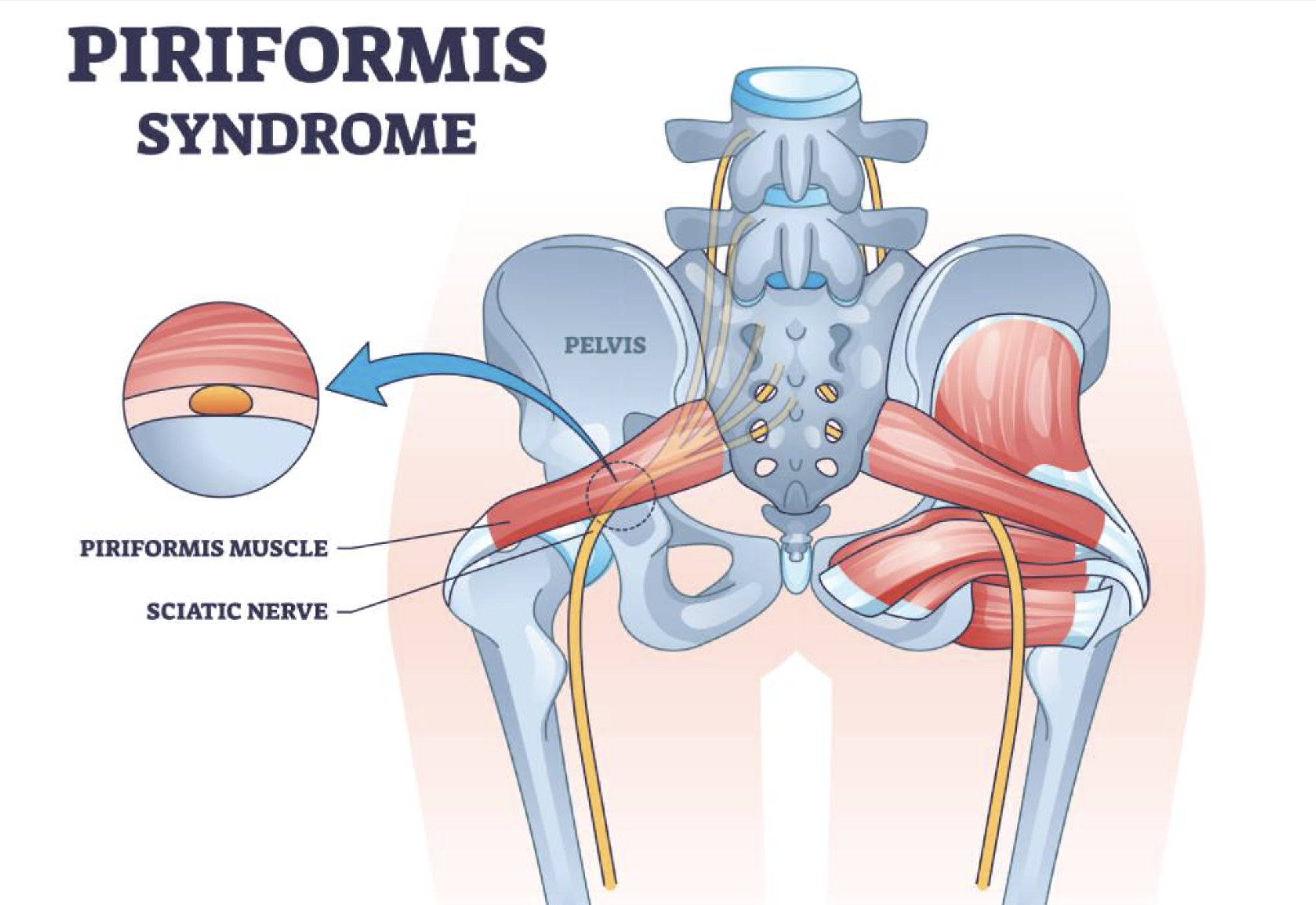
The piriformis is a small, deep muscle in the buttock that helps rotate and stabilise the hip. The sciatic nerve runs very close to this muscle, and in some people passes directly through it, which means that when the piriformis becomes tight, overactive, or irritated, it can compress or irritate the nearby sciatic nerve, producing symptoms that can travel down the back of the leg.
Because these symptoms can closely resemble sciatica caused by a disc issue in the lower back, distinguishing between the two is an important part of assessment, since the treatment focus and approach differ meaningfully between a spinal cause and a piriformis-related one.
It's also worth knowing that true nerve compression from the piriformis muscle is somewhat less common than the label ‘piriformis syndrome’ suggests — tightness or overactivity in the muscle without significant nerve involvement is a more frequent finding, and still responds well to the same general treatment approach.
What Causes It?
Piriformis syndrome is often aggravated by prolonged sitting, particularly on hard surfaces, in car seats, or with a wallet in a back pocket that tilts the pelvis unevenly. It's also common in runners and cyclists, particularly following a sudden increase in training volume or hill work, and can develop after a direct injury to the buttock, such as a fall.
Common Symptoms
A deep ache in the buttock, sometimes worse with sitting
Symptoms that can radiate down the back of the thigh, sometimes mimicking sciatica
Pain aggravated by climbing stairs, squatting, or prolonged sitting
Tenderness with direct pressure over the buttock
Discomfort with specific hip rotation movements
How We Diagnose It
Assessment includes specific tests that stretch and load the piriformis to reproduce your symptoms, alongside a thorough check of your lower back and a neurological screen to help distinguish piriformis-related symptoms from a spinal cause of sciatica. Getting this distinction right early on makes a real difference to how quickly your treatment plan gets you moving in the right direction.
How Physiotherapy Helps
Treatment typically includes hands-on techniques to reduce tension in the piriformis and surrounding muscles, combined with specific stretching and mobility work targeted at the muscle itself. We'll also address any contributing postural or sitting habits, along with strengthening work for the glutes and deep hip stabilisers, since a piriformis that's overworking to compensate for weaker surrounding muscles is a common underlying pattern.
For runners and cyclists, we'll also review training load and technique factors that may be contributing, since addressing the underlying cause is what prevents this from becoming a recurring problem every time training volume increases.
Self-Care While You Wait For Your Appointment
Avoiding prolonged sitting, particularly on hard surfaces, and taking regular breaks to stand and move will help reduce irritation in the short term. Gentle piriformis stretching, kept within a comfortable range, can also provide some relief, though it's worth avoiding aggressive stretching until you've had a proper assessment to confirm the diagnosis.
Frequently Asked Questions
Is piriformis syndrome the same as sciatica?
Not exactly. True sciatica refers to nerve root irritation in the lower back, while piriformis syndrome involves compression of the sciatic nerve further down, in the buttock. The symptoms can look similar, which is why an accurate assessment matters.
Should I stretch my piriformis every day?
Gentle, appropriate stretching can help, but it's most effective combined with strengthening work addressing the underlying cause, rather than as a standalone long-term solution.
Can sitting for work cause piriformis syndrome?
Yes, prolonged sitting is one of the more common contributing factors, particularly combined with weak glutes and reduced overall activity levels.
Will piriformis syndrome go away on its own?
Mild cases sometimes settle with activity modification alone, but more persistent cases generally benefit from a targeted program addressing both the muscle tightness and the underlying strength deficits contributing to it.
Book a Hip Assessment in Erina
If piriformis syndrome is getting in the way of walking, sport or everyday life, the sooner it's properly assessed, the sooner we can get you moving with confidence again. Our Erina team will give you a clear diagnosis, an honest treatment plan, and a realistic timeframe — no guesswork, no generic exercise sheets.
Call Thrive Physiotherapy or book online today to get started.
Not sure if this is what's causing your hip pain? Visit our Hip Physiotherapy hub page to see the full range of hip conditions we treat.