

Groin Strain Physiotherapy — Erina & Central Coast
A sharp grab in the inner thigh during a sprint or a sudden change of direction, followed by an achy, tight feeling in the groin, is the classic story behind adductor-related groin pain. It's one of the most common sporting injuries we treat, particularly in football and soccer players, and getting the rehab right matters a great deal for preventing it becoming a recurring problem.
What Is a Groin Strain?
The adductor muscles run along the inside of your thigh, working to bring your leg toward the midline of your body and to stabilise your hip during single-leg loading, like sprinting and kicking. A strain describes an overload or tearing injury to one of these muscles, most commonly the adductor longus, ranging from a mild strain through to a more significant tear depending on the mechanism and force involved.
Groin pain can also develop more gradually without one single injury moment, particularly in athletes managing a heavy load of sprinting, cutting, and kicking across a season, where the adductors are being repeatedly asked to decelerate and change direction under significant force.
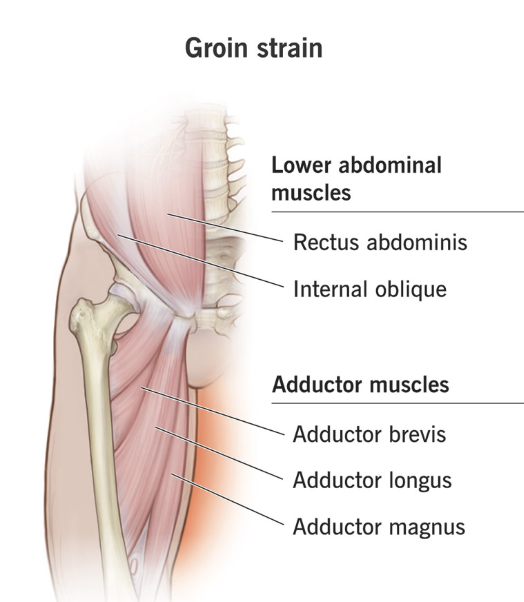
What Causes It?
Acute strains typically occur during sprinting, kicking, or rapid changes of direction, particularly when the muscle is asked to work eccentrically — lengthening under load — such as during a sliding tackle or an off-balance kick. Risk factors include a previous groin injury, relatively weaker adductor strength compared to the surrounding muscles, and a sudden increase in training or match load, particularly early in a pre-season period.
Common Symptoms
Pain in the groin or inner thigh, often sudden and sharp at the time of injury
Tightness or achiness in the groin afterward, particularly the next day
Pain with sprinting, kicking, or changing direction
Tenderness with direct pressure along the inner thigh
In more significant tears, bruising and visible swelling
How We Diagnose It
Assessment includes specific strength and stretch tests for the adductors, along with palpation to identify the location and extent of the injury. We'll also assess your hip and pelvic strength more broadly, since imbalances here are a well-recognised risk factor for both the initial injury and for re-injury if not addressed during rehab. Imaging is occasionally used for more significant injuries or when the diagnosis isn't clear, but most groin strains are identified and graded clinically.
How Physiotherapy Helps
Treatment follows a structured, staged approach: protecting the area appropriately in the first few days, followed by a progressive return to loading, then sport-specific movements like sprinting, cutting, and kicking, and finally a graded return to full training and competition. Adductor strength, particularly eccentric strength, is a major focus throughout, since this is one of the most well-supported ways to reduce the risk of re-injury.
Rushing this process is one of the most common reasons groin strains become a recurring, frustrating problem across a season. We'll give you clear, objective milestones to track through each stage, so decisions about progressing your return to sport are based on how your groin is actually performing rather than just how many weeks have passed.
Self-Care While You Wait For Your Appointment
In the first few days after an acute strain, protecting the area, using ice for comfort, and avoiding sprinting, kicking, or forceful stretching will help manage symptoms and protect the healing tissue. Gentle walking within a pain-free range is usually fine, but it's worth avoiding a rushed return to sport until you've had a proper assessment and staged rehab plan.
Frequently Asked Questions
How long until I can return to sport after a groin strain?
It varies significantly with severity, from a couple of weeks for a mild strain to three months or more for a significant tear. We'll track your progress against clear milestones rather than a fixed calendar date.
Why do groin strains keep coming back?
Recurrence is common when the return to sport happens before adequate strength, particularly eccentric strength, has been rebuilt. A properly staged rehab program significantly reduces this risk compared to just waiting until pain settles.
Should I stretch a strained groin?
Gentle, pain-free stretching has a place later in rehab, but aggressive stretching in the early stages can aggravate the injury. We'll guide you on what's appropriate at each stage of your recovery.
Book a Hip Assessment in Erina
If a groin strain is getting in the way of walking, sport or everyday life, the sooner it's properly assessed, the sooner we can get you moving with confidence again. Our Erina team will give you a clear diagnosis, an honest treatment plan, and a realistic timeframe — no guesswork, no generic exercise sheets.
Call Thrive Physiotherapy or book online today to get started.
Not sure if this is what's causing your hip pain? Visit our Hip Physiotherapy hub page to see the full range of hip conditions we treat.