

Surfing Physio – Erina & the Central Coast
Common surfing injuries
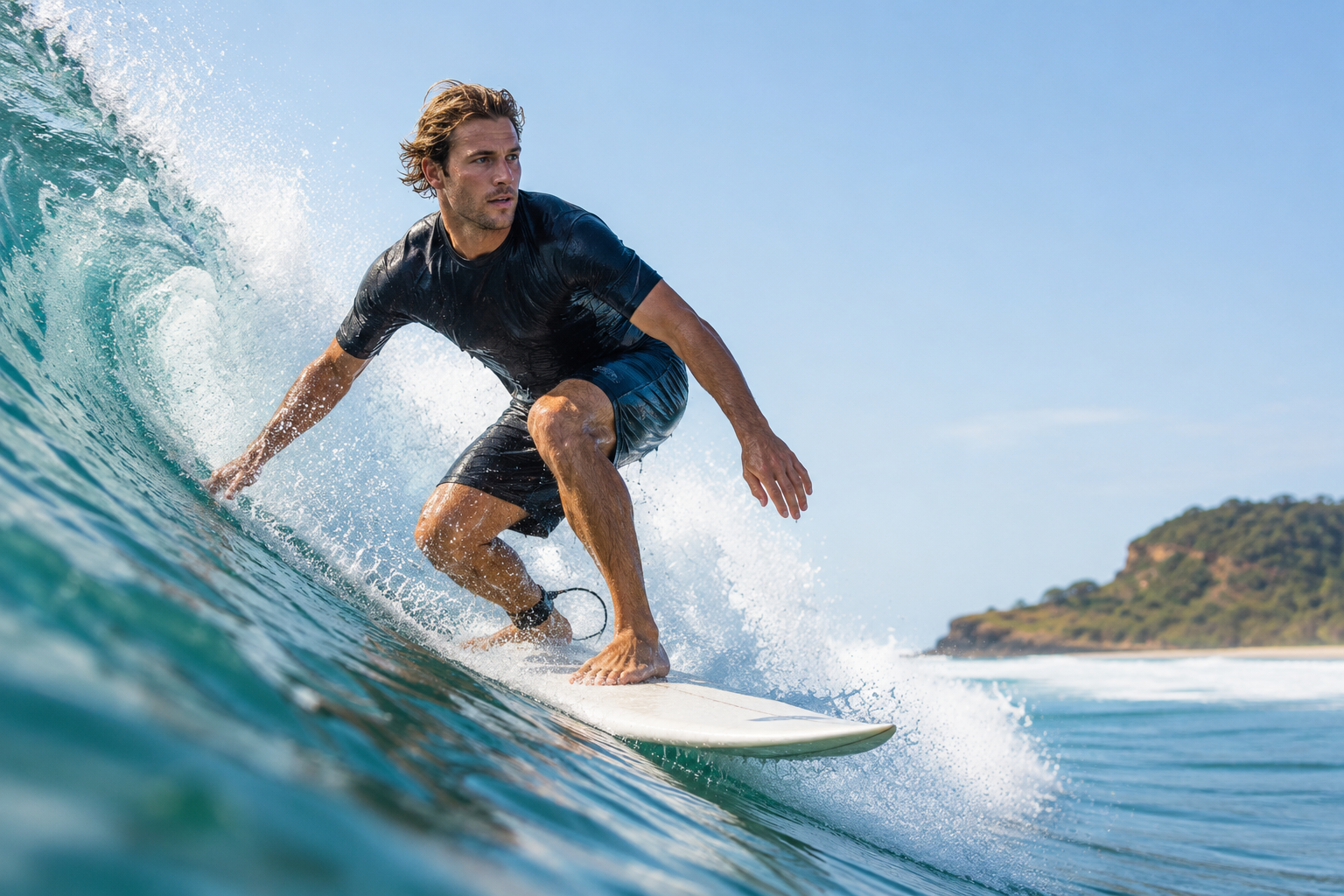
Surfing places different demands on your body throughout a session. Paddling involves repeated shoulder movements and sustained spinal extension, while popping up and manoeuvring on the board require strength, mobility, balance and control.
Some of the common problems we see in surfers include:
Shoulder pain
Paddling involves hundreds of repeated shoulder movements, which can irritate the rotator cuff and other structures around the shoulder. Pain may develop gradually, particularly after longer sessions or a sudden increase in time in the water.
Physiotherapy can help identify what is contributing to your pain and guide your recovery with appropriate exercises, mobility work and progressive strengthening.
Learn more about our shoulder pain and injuries services.
Lower back pain and stiffness
The extended position used during paddling can aggravate lower back pain, particularly if you spend long periods in the water or already have limited hip or thoracic mobility. Repeated movements and sudden changes in load can also contribute to symptoms.
Treatment may involve improving spinal and hip mobility, building trunk and hip strength, and addressing factors that make paddling uncomfortable.
Explore our lower back pain physiotherapy page to learn more.
Neck pain
Looking forward while paddling places the neck in a sustained extended position. Spending hours in this posture can contribute to stiffness, muscular discomfort and headaches in some surfers.
A physiotherapy assessment can help determine whether your symptoms are related to neck movement, muscle loading or another contributing factor, with treatment tailored to your needs and surfing demands.
Explore our neck pain physiotherapy page to learn more.
Hip, knee and ankle injuries
The pop-up, take-off and landing positions used in surfing require good hip mobility, lower-limb strength and balance. Twisting movements, awkward landings and wipeouts can also place stress on the knees and ankles.
Depending on the injury, rehabilitation may focus on restoring movement, improving strength and balance, and gradually rebuilding the capacity needed to surf.
Explore our hip pain physiotherapy page to learn more.
How can physiotherapy help surfers?
The right approach depends on your symptoms, injury and surfing goals. At Thrive Physio, we start by assessing your movement, strength and the activities that aggravate your pain.
Your treatment plan may include:
Pain management: helping you understand your symptoms and identify movements or training loads that may be aggravating them.
Mobility work: addressing relevant restrictions in your shoulders, thoracic spine, hips or other areas.
Strength and conditioning: building the strength and endurance needed for paddling, popping up and spending longer in the water.
Gradual return to surfing: helping you work out when and how to increase your time in the water without unnecessarily aggravating your symptoms.
Injury prevention: identifying modifiable factors that may help reduce the risk of recurring problems.
Where possible, we want to help you stay active during recovery. Depending on your injury, you may be able to continue some surfing or other exercise while symptoms settle. We’ll help you make an appropriate plan rather than simply telling you to stop everything.
Surfing is more than a sport. Whether you’re paddling out before work, chasing a good swell on the weekend or spending hours in the water whenever conditions line up, it’s hard to stay away for long.
But the repetitive paddling, powerful pop-ups and demands of surfing can take a toll on your body. Shoulder pain, lower back stiffness, neck pain and other injuries can make it difficult to surf comfortably — or keep you out of the water altogether.
At Thrive Physiotherapy in Erina, we help surfers on the Central Coast manage injuries, improve mobility and build the strength needed to get back in the water. Our aim is to help you recover well and return to surfing with confidence.
Meet Sam –
a surfer who understands

Sam knows that surfing is more than just exercise. When you love surfing, a good swell can be hard to pass up — even when your body is telling you to take it easy.
As a surfer himself, Sam understands the frustration of an injury that keeps you out of the water, as well as the temptation to paddle back out before you're ready. He appreciates that getting back to surfing isn't just about being pain-free in everyday life; it's about having the strength, mobility and confidence to handle the demands of a session.
Sam brings that understanding to his physiotherapy approach, helping surfers work towards their goals with a practical rehabilitation plan that considers both their injury and their desire to get back in the water.
Surfing physiotherapy on the Central Coast
Based in Erina, Thrive Physiotherapy works with people from across the Central Coast, including surfers from Terrigal, Avoca Beach, Wamberal, Copacabana and surrounding areas.
Whether you're dealing with persistent shoulder pain, a recurring back problem or an acute injury after a wipeout, we can assess your symptoms and help you understand the next steps.
You don't need to wait until an injury becomes severe before seeking help. Getting it assessed early can help you make informed decisions about activity and recovery.
Ready to get back in the water?
If pain or stiffness is affecting your surfing, our team at Thrive Physiotherapy can help you work towards a safe and confident return.