

Tennis Elbow Physiotherapy — Erina & Central Coast
If the outside of your elbow has started aching every time you grip something — a coffee cup, a power drill, a firm handshake — there's a good chance you're dealing with tennis elbow. It's one of the most common elbow complaints we see at Thrive Physiotherapy in Erina, and despite the name, the vast majority of the people we treat for it have never played a set of tennis in their life.
What Is Tennis Elbow?
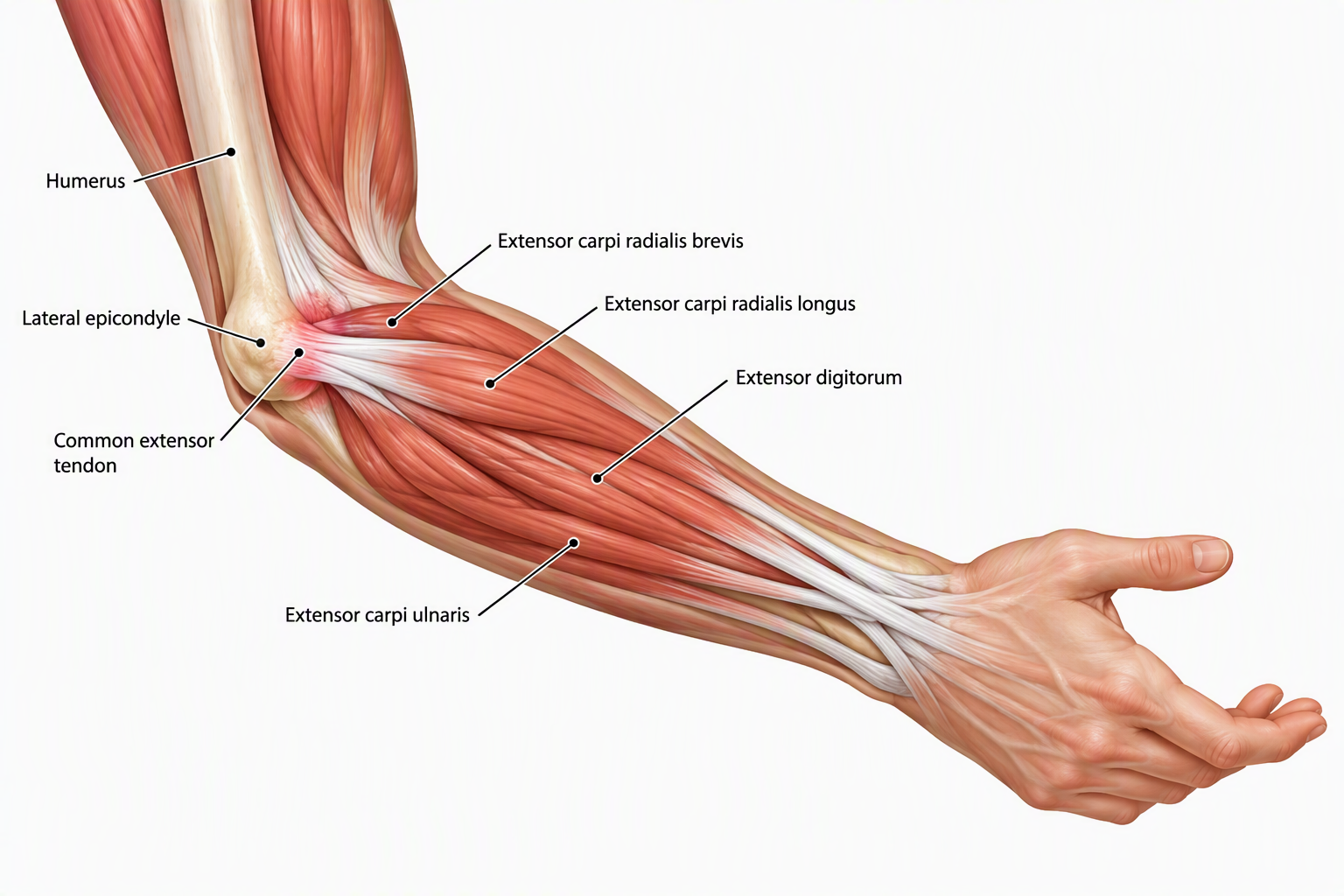
Tennis elbow, known medically as lateral epicondylalgia, is an overload injury to the common extensor tendon, which attaches on the bony bump on the outside of your elbow and controls the muscles that extend your wrist and fingers. When this tendon is asked to do more than it can currently tolerate — through repetitive gripping, typing, or manual tasks — it becomes irritated and gradually less able to cope with everyday load.
It's not usually a sign of damage or ‘wear and tear’ in the way people often assume. It's closer to the tendon falling behind on its capacity, and needing a structured way to rebuild it, rather than something that's been structurally torn.
What Causes It?
We see tennis elbow most often in tradies, particularly those doing repetitive gripping work like carpentry, plumbing, or using power tools, as well as office workers whose symptoms started after a busy stretch of typing and mouse use. It's also common after a sudden increase in racquet sports, home renovation projects, or gardening — anything involving repetitive wrist and forearm movement that's outpaced what the tendon is used to.
Common Symptoms
Pain or tenderness on the bony bump on the outside of the elbow
Pain that worsens with gripping, twisting, or lifting with a straight arm
Discomfort with simple tasks like shaking hands, lifting a kettle, or turning a door handle
A noticeable drop in grip strength
Pain that's often worse first thing in the morning or after a day of repetitive activity
How We Diagnose It
Diagnosis is generally straightforward and clinical — based on the location of your pain, your history, and specific tests that reproduce symptoms by loading the extensor tendon under resistance. Imaging isn't usually needed, since the clinical pattern is typically clear enough on its own, and tendon changes on scans don't always correlate well with pain in people without symptoms.
How Physiotherapy Helps
Treatment is built around progressive loading — gradually and specifically challenging the extensor tendon so it rebuilds its tolerance rather than staying fragile. In the early, more irritable stage, we'll also help you modify the activities that are flaring things up and may use hands-on treatment to ease pain and reduce compensatory tension through the forearm.
As things settle, we progress your strength program to match the demands of your work or sport, so you're not just pain-free at rest but genuinely capable of gripping, lifting, and using your arm normally again. We'll also look at practical adjustments — grip size, tool choice, or technique — that reduce ongoing strain, since addressing the underlying cause matters just as much as calming the current flare-up.
Self-Care While You Wait For Your Appointment
Temporarily easing off on heavy gripping tasks, using a larger tool handle where possible, and avoiding repetitive lifting with a straight arm can all help take the edge off in the short term. A counterforce brace, worn just below the elbow, can also provide some relief during aggravating activities. Try to keep some gentle movement going rather than avoiding the arm altogether, since a small amount of pain-free activity is generally more helpful than complete rest.
Frequently Asked Questions
Do I need to stop working or playing sport?
Usually not entirely. We'll help you identify which specific movements to modify temporarily, rather than telling you to avoid using your arm altogether.
How long does tennis elbow typically take to resolve?
Many cases improve within six to twelve weeks with a proper loading program, though longer-standing cases can take a bit longer to fully settle.
Is a cortisone injection a good option for tennis elbow?
Injections can provide short-term pain relief but don't address the underlying tendon capacity issue, and some research suggests they may not improve longer-term outcomes compared to a structured loading program. We're happy to discuss the pros and cons based on your specific situation.
Book an Elbow Assessment in Erina
If tennis elbow is getting in the way of work, sport or everyday tasks, the sooner it's properly assessed, the sooner we can get you back to full grip strength. Our Erina team will give you a clear diagnosis, an honest treatment plan, and a realistic timeframe — no guesswork, no generic exercise sheets.
Call Thrive Physiotherapy or book online today to get started.
Not sure if this is what's causing your elbow pain? Visit our Elbow Physiotherapy hub page to see the full range of elbow conditions we treat.