

Patellar Tendinopathy Physiotherapy — Erina & Central Coast
Pain right at the bottom of your kneecap that flares with jumping, squatting, or landing is a classic sign of patellar tendinopathy, often called jumper's knee. It's particularly common in basketball, volleyball, and netball players, and while it can be a stubborn condition to shift, it responds well to the right structured rehab.
What Is Patellar Tendinopathy?
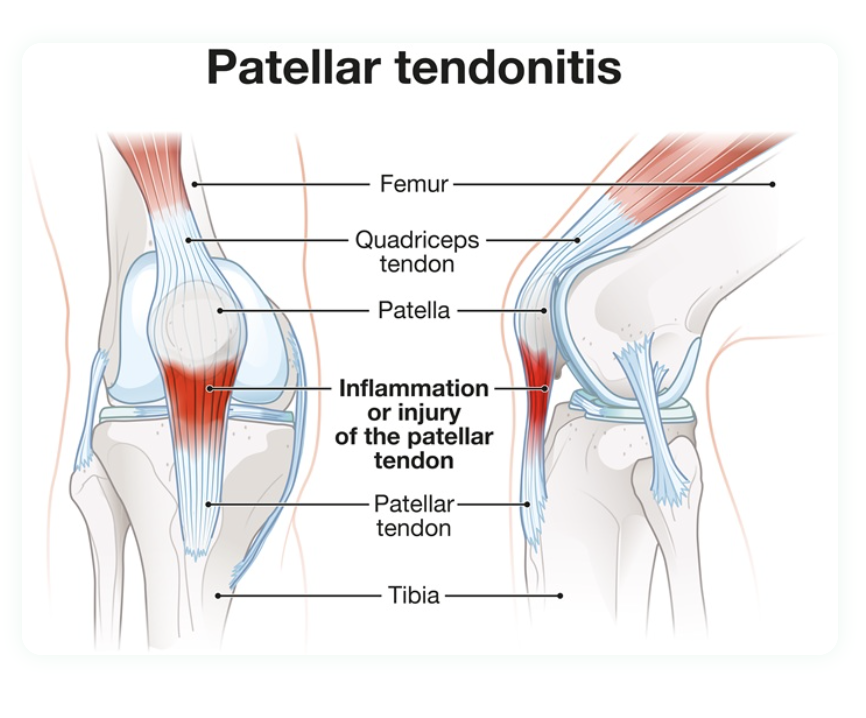
The patellar tendon connects the bottom of your kneecap to your shin bone and takes on enormous load with jumping, landing, and rapid changes of direction. Tendinopathy describes an overload injury to this tendon, where it's been asked to handle more than it can currently tolerate, leading to irritation and reduced load capacity rather than any acute tear.
A distinctive feature of this condition is that pain often reduces once you've warmed up during activity, only to return, sometimes worse, the following morning. This pattern is very typical of tendon overload and doesn't indicate ongoing damage during the activity itself, though it does mean the tendon needs a genuinely structured loading plan rather than just pushing through the warm-up effect indefinitely.
What Causes It?
Patellar tendinopathy is most common in sports involving repetitive jumping and landing, particularly with sudden increases in training volume, intensity, or frequency — preseason training blocks are a classic trigger. Landing technique, quad strength, and overall training load management all play a role in how much stress the tendon is exposed to.
Common Symptoms
Pain directly at the bottom of the kneecap
Pain that worsens with jumping, landing, and going down stairs
Discomfort with squatting, particularly deep squats
Pain that eases during warm-up, then returns afterward or the next morning
Tenderness to direct pressure on the tendon
How We Diagnose It
Diagnosis is generally clinical, based on the specific location of your pain, your training history, and tests that load the tendon to reproduce your symptoms, such as single-leg decline squats. Imaging isn't usually necessary to confirm the diagnosis, though it can occasionally help assess severity in more persistent or significant cases.
How Physiotherapy Helps
Treatment centres on a progressive loading program specifically designed for tendons, gradually rebuilding the patellar tendon's capacity to handle jumping and landing demands. This typically starts with isometric exercises to help manage pain, progressing through heavier strengthening work, and eventually into sport-specific jumping and landing retraining.
Managing training load throughout this process is just as important as the exercises themselves — continuing to jump and land on a tendon that hasn't yet rebuilt capacity is one of the most common reasons this condition drags on far longer than it needs to. We'll work with you and, where relevant, your coach to find the right balance between staying involved in sport and giving the tendon what it needs to recover.
Self-Care While You Wait For Your Appointment
Reducing jumping and landing volume in the short term, without necessarily stopping all activity, will help manage symptoms. Isometric exercises like a wall sit, held for a comfortable duration, can sometimes help reduce pain in the interim, though it's worth confirming this is appropriate for your specific presentation at your assessment.
Frequently Asked Questions
Can I keep playing my sport with jumper's knee?
Often yes, in a modified capacity, particularly in the early stages. We'll help you find a sensible balance between managing symptoms and staying involved in training and competition.
How long does patellar tendinopathy take to resolve?
It varies, but many cases take eight to sixteen weeks with a proper loading program, and more longstanding cases can take longer. Patience and consistency with the loading program make a genuine difference to outcomes.
Is rest the best treatment for jumper's knee?
Complete rest often isn't the best approach, since tendons respond better to appropriate, progressive loading than to complete inactivity. We'll guide you on the right balance for your stage of recovery.
Why does my knee feel fine during warm-up but sore afterward?
This warm-up effect is a very typical tendon pattern, where activity temporarily masks discomfort. It doesn't mean the tendon is coping well with the load, which is why the delayed soreness afterward remains an important signal to track.
Book a Knee Assessment in Erina
If patellar tendinopathy is getting in the way of training, work or everyday life, the sooner it's properly assessed, the sooner we can get you moving with confidence again. Our Erina team will give you a clear diagnosis, an honest treatment plan, and a realistic timeframe — no guesswork, no generic exercise sheets.
Call Thrive Physiotherapy or book online today to get started.
Not sure if this is what's causing your knee pain? Visit our Knee Physiotherapy hub page to see the full range of knee conditions we treat.