

ITB Syndrome Physiotherapy — Erina & Central Coast
A sharp or burning pain on the outside of your knee that reliably shows up after a predictable distance into a run is a classic sign of iliotibial band syndrome, often shortened to ITB syndrome. It's one of the most common overuse injuries we see in runners and cyclists, and it generally responds very well to a properly targeted rehab approach.
What Is ITB Syndrome?
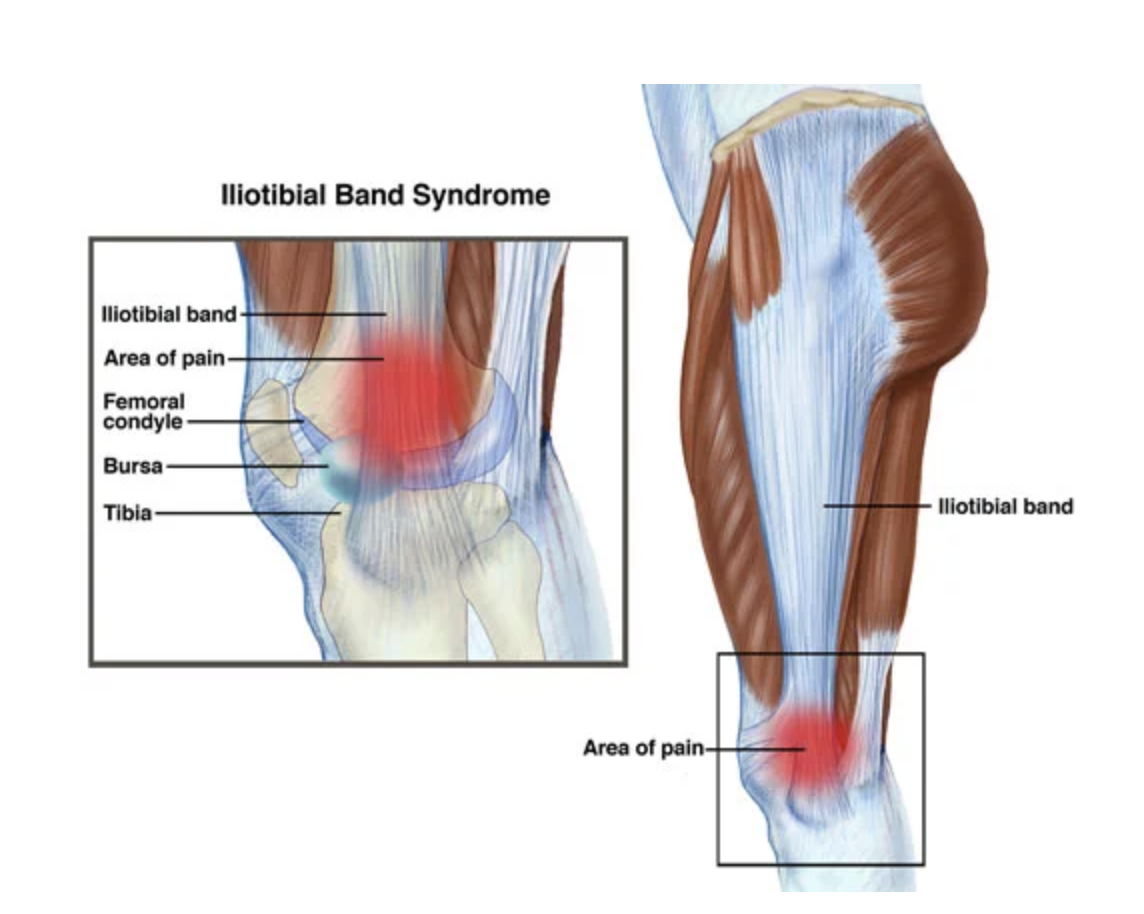
The iliotibial band is a thick band of connective tissue that runs from the hip down the outside of the thigh, crossing the outside of the knee before attaching just below the joint. ITB syndrome describes irritation that develops as this band repeatedly moves across the outside of the knee during running, particularly related to how it interacts with the underlying tissue at a certain point in the knee's bending and straightening cycle.
It's worth knowing that the ITB itself is a very strong, relatively inflexible structure — stretching it directly has limited effect, which is part of why treatment tends to focus more on the muscles controlling leg position during running than on the band itself.
What Causes It?
ITB syndrome is strongly associated with training factors — a sudden increase in running volume, a lot of downhill running, or running repeatedly on a cambered surface like the sloped edge of a road. Hip strength and control is a frequently identified contributing factor, since weakness here can change how the leg moves during running, increasing strain on the ITB as it crosses the knee.
Common Symptoms
A sharp or burning pain on the outside of the knee
Pain that reliably comes on after a specific distance or time into a run
Symptoms that ease with rest but return once running resumes at the same level
Tenderness to direct pressure on the outside of the knee
Pain that's typically absent at rest or with normal walking
How We Diagnose It
Diagnosis is generally clinical, based on the distinctive pattern of pain related to running distance, along with specific tests that assess ITB tightness and hip strength and control. We'll also review your training history and running technique, since these are often central to understanding what's driving the irritation. Imaging isn't usually necessary to confirm the diagnosis.
How Physiotherapy Helps
Treatment typically starts with temporarily modifying your running — adjusting distance, avoiding cambered surfaces or excessive downhill running, and sometimes altering cadence — to reduce irritation while addressing the underlying contributing factors. Hip and glute strengthening is a central focus, since improved control here reduces the strain placed on the ITB during each stride.
As symptoms settle, we build back up your running volume in a structured, gradual way, using your hip strength gains and any technique adjustments to reduce the likelihood of symptoms returning. Rushing this progression, or returning straight to previous training volumes, is one of the most common reasons ITB syndrome becomes a recurring frustration each time training ramps up.
Self-Care While You Wait For Your Appointment
Temporarily reducing running volume, avoiding cambered surfaces and excessive downhill running, and allowing symptoms to settle before gradually reintroducing training will help in the short term. Foam rolling around the outside of the thigh may provide some temporary symptom relief for some people, though it doesn't address the underlying hip strength and control issues that are usually the main driver.
Frequently Asked Questions
Can I keep running with ITB syndrome?
Often yes, with temporary modifications to distance, surface, and route. We'll help you find a sensible training approach while addressing the underlying contributing factors.
Will stretching the ITB fix this?
Stretching may provide some temporary relief, but it's generally less effective long-term than addressing hip strength and control, which is usually the more significant underlying factor.
How long does ITB syndrome take to resolve?
Many cases improve within four to ten weeks with appropriate training modification and a targeted strengthening program, though this varies depending on how long symptoms have been present.
Book a Knee Assessment in Erina
If ITB syndrome is getting in the way of training, work or everyday life, the sooner it's properly assessed, the sooner we can get you moving with confidence again. Our Erina team will give you a clear diagnosis, an honest treatment plan, and a realistic timeframe — no guesswork, no generic exercise sheets.
Call Thrive Physiotherapy or book online today to get started.
Not sure if this is what's causing your knee pain? Visit our Knee Physiotherapy hub page to see the full range of knee conditions we treat.