

Golfer's Elbow Physiotherapy — Erina & Central Coast
Pain on the inside of your elbow that flares with gripping, lifting, or twisting is the classic sign of golfer's elbow. Like its outer-elbow cousin, tennis elbow, most people we see with this condition have never swung a golf club — it's simply the common name for a very common tendon overload injury.
What Is Golfer's Elbow?
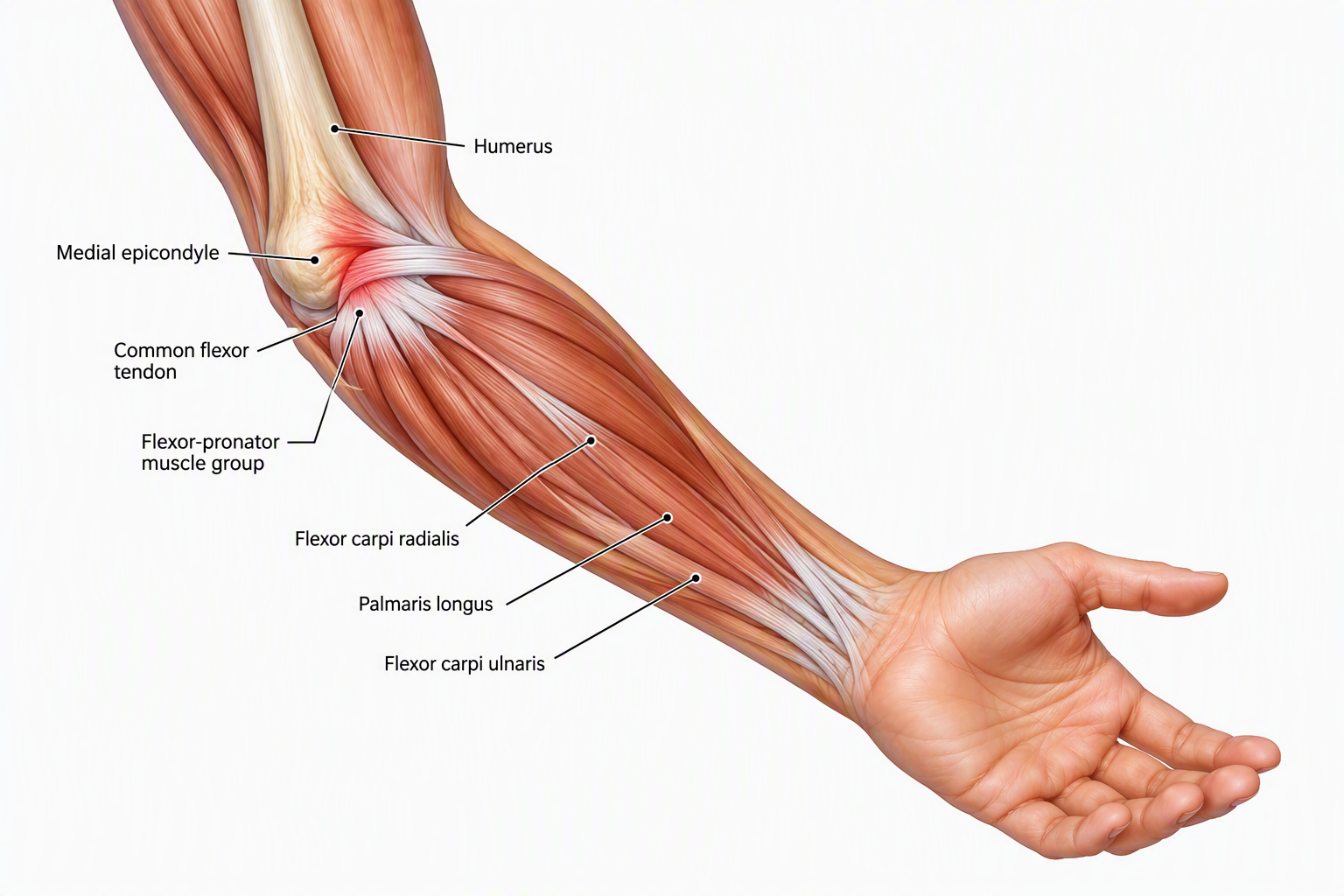
Golfer's elbow, or medial epicondylalgia, affects the common flexor tendon, which attaches on the inside of your elbow and controls the muscles that flex your wrist and grip your fingers. When this tendon is repeatedly overloaded beyond its current capacity, it becomes irritated and gradually more sensitive to everyday gripping and lifting tasks.
Because the ulnar nerve runs close by on the inside of the elbow, golfer's elbow can sometimes overlap with some nerve-related tingling, which is one of the things we check carefully during assessment to make sure treatment is targeting the right structure.
It's also worth knowing that golfer's elbow can develop in either arm regardless of which hand is dominant, since it comes down to which side has been carrying the repetitive load — whether that's a trailing arm in a golf swing, a gripping hand at work, or the arm you favour when lifting.
What Causes It?
We see this most often in tradies and manual workers doing repetitive gripping tasks, gardeners, golfers and throwing athletes, and anyone who's had a sudden increase in activities that involve flexing the wrist against resistance — carrying heavy bags, using hand tools, or a big weekend of home projects.
Common Symptoms
Pain or tenderness on the inside of the elbow
Pain that worsens with gripping, lifting, or twisting movements
Discomfort with tasks like carrying shopping bags or shaking hands
Occasional tingling into the ring and little fingers if the nearby nerve is also irritated
Weakness in grip strength, particularly with the wrist bent forward
How We Diagnose It
Assessment involves a detailed history, palpation of the inside of the elbow, and specific tests that load the flexor tendon to reproduce your symptoms. We'll also check the ulnar nerve specifically, since distinguishing pure tendon pain from combined nerve irritation changes some of the finer details of your treatment plan. Imaging is rarely needed to confirm the diagnosis.
How Physiotherapy Helps
As with tennis elbow, treatment centres on a progressive loading program for the flexor tendon, building its tolerance back up in a structured, gradual way. Early on, this is combined with activity modification and, where helpful, hands-on treatment to ease pain and forearm tension.
We'll also look closely at your grip technique and any repetitive tasks — whether that's a golf swing, a specific work movement, or a gym exercise — that may be driving ongoing overload. For golfers specifically, small technique or equipment adjustments alongside rehab often make a meaningful difference to how quickly symptoms settle and how likely they are to return.
Recovery timeframes are broadly similar to tennis elbow, though cases with a nerve component sometimes take a little longer to fully settle, since the nerve tends to be slower to calm down than the tendon itself.
Self-Care While You Wait For Your Appointment
Easing off on heavy gripping and wrist-flexing tasks in the short term will help reduce irritation while you wait for your assessment. Gentle range of motion, kept within a comfortable limit, is generally fine and can help maintain movement. If you're a golfer, temporarily reducing practice volume rather than stopping altogether is usually a reasonable middle ground until you've been assessed.
Frequently Asked Questions
Can I keep playing golf with golfer's elbow?
Often yes, in a modified capacity. We'll help you work out a sensible volume and technique adjustments while your tendon rebuilds its capacity.
Is golfer's elbow the same as tennis elbow?
They're closely related conditions affecting mirror-image tendons on opposite sides of the elbow, with a very similar underlying mechanism and treatment approach.
Why do I get tingling in my fingers with golfer's elbow?
The ulnar nerve runs close to the inside of the elbow, so it can become irritated alongside the flexor tendon in some cases. We'll assess this specifically to make sure your treatment plan addresses both if needed.
Book an Elbow Assessment in Erina
If golfer's elbow is getting in the way of work, sport or everyday tasks, the sooner it's properly assessed, the sooner we can get you back to full grip strength. Our Erina team will give you a clear diagnosis, an honest treatment plan, and a realistic timeframe — no guesswork, no generic exercise sheets.
Call Thrive Physiotherapy or book online today to get started.
Not sure if this is what's causing your elbow pain? Visit our Elbow Physiotherapy hub page to see the full range of elbow conditions we treat.