

Elbow Osteoarthritis Physiotherapy — Erina & Central Coast
A deep, persistent ache in the elbow, along with stiffness that's often worse in the morning or after periods of heavy use, can point to osteoarthritis. It's less commonly talked about than hip or knee arthritis, but it's a genuine and manageable condition, particularly common in people with a history of heavy manual work or previous elbow injury.
What Is Elbow Osteoarthritis?
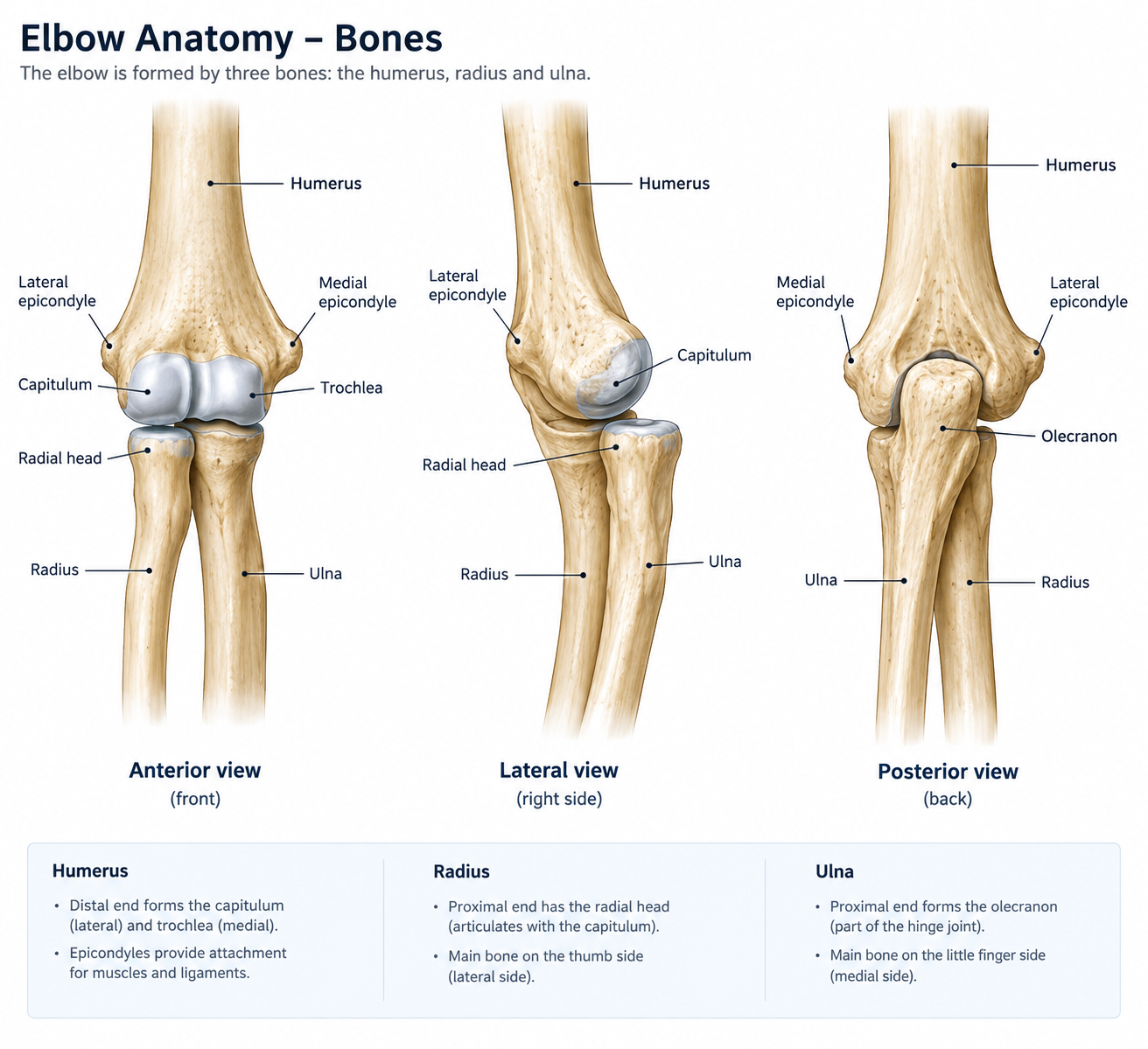
Osteoarthritis involves gradual wear of the cartilage that cushions the elbow joint, along with changes to the surrounding bone and joint lining over time. This can lead to pain, stiffness, and sometimes a grinding or catching sensation with movement. It tends to develop slowly over years rather than appearing suddenly, and often becomes more noticeable with cold weather or after periods of heavy, repetitive use.
Unlike some of the other elbow conditions we see, osteoarthritis is a genuinely long-term, ongoing condition rather than something that resolves completely with a course of treatment. That doesn't mean it can't be managed well — with the right approach, most people keep doing the things they want to do, just with some sensible pacing and a solid strengthening foundation underneath everything else.
What Causes It?
Elbow osteoarthritis is more common in people with a history of heavy manual work, repetitive heavy lifting, previous elbow fractures or dislocations, or a family history of arthritis. It's also seen more often in certain manual trades and in people who've had significant elbow injuries earlier in life, even many years prior, since old injuries can accelerate wear in the joint over the long term.
Common Symptoms
A deep ache in the elbow, often worse after activity or in cold weather
Stiffness, particularly first thing in the morning
A grinding, catching, or locking sensation with movement
Gradually reduced range of motion, particularly full straightening
Occasional swelling around the joint during flare-ups
How We Diagnose It
Diagnosis is based on your history, the pattern of your symptoms, and a hands-on assessment of your elbow's movement and any grinding or catching present through the range. X-rays can help confirm the diagnosis and give us a sense of severity, though the degree of change on an X-ray doesn't always match up neatly with how much pain or stiffness someone is experiencing — which is part of why we focus heavily on your actual function and goals rather than the image alone.
How Physiotherapy Helps
While osteoarthritis can't be reversed, physiotherapy makes a genuine difference to how it affects your day-to-day life. Treatment typically includes a targeted strengthening program for the muscles supporting the elbow, gentle range of motion work to manage stiffness, and practical strategies for pacing activities to reduce flare-ups without unnecessarily limiting what you do.
We'll also help you understand your specific flare-up pattern — what tends to aggravate things and what settles them — so you have a clear, practical plan for managing symptoms yourself between flare-ups, rather than needing to see us every time your elbow acts up. For more advanced or persistent cases significantly affecting function, we can also discuss further options with your GP, including referral to a specialist if joint injections or other interventions become relevant.
Self-Care While You Wait For Your Appointment
Gentle, regular movement tends to help more than rest for arthritic joints, even though it can feel counterintuitive when the joint is stiff and sore. Heat can be helpful for easing morning stiffness, while ice is often more useful after a flare-up from overuse. Pacing heavier or repetitive tasks across the day, rather than doing them all in one long stretch, can also help reduce the intensity of flare-ups.
Frequently Asked Questions
Can elbow osteoarthritis be cured?
No, but it can be well managed. Most people maintain good function and manageable pain levels long-term with the right combination of strengthening, activity pacing, and flare-up management.
Will exercise make my arthritis worse?
The right type and amount of exercise generally helps rather than harms an arthritic joint, by maintaining strength and movement. We'll guide you on what's appropriate for your specific elbow.
Do I need surgery for elbow osteoarthritis?
Most people manage well without surgery. It's occasionally considered for more advanced cases significantly affecting function and quality of life, and we can help guide that conversation if it becomes relevant.
Book an Elbow Assessment in Erina
If elbow osteoarthritis is getting in the way of work, sport or everyday tasks, the sooner it's properly assessed, the sooner we can get you back to full grip strength. Our Erina team will give you a clear diagnosis, an honest treatment plan, and a realistic timeframe — no guesswork, no generic exercise sheets.
Call Thrive Physiotherapy or book online today to get started.
Not sure if this is what's causing your elbow pain? Visit our Elbow Physiotherapy hub page to see the full range of elbow conditions we treat.