

Elbow Bursitis Physiotherapy — Erina & Central Coast
A sudden, noticeable swelling right at the tip of your elbow — sometimes appearing almost overnight — is usually elbow bursitis. It can look alarming given how quickly it can swell, but it's a well-understood condition, and most cases settle well with the right early management.
What Is Elbow Bursitis?
The olecranon bursa is a small, fluid-filled sac that sits directly over the bony point of your elbow, cushioning it against pressure and friction. When it becomes irritated or inflamed — usually from repeated pressure, a direct knock, or occasionally an infection — it can fill with extra fluid and swell noticeably, sometimes to the size of a golf ball or larger.
It tends to look more dramatic than it feels in milder cases, though more significant flare-ups can be genuinely painful, particularly if the bursa becomes tight with fluid or infected. Because it sits so close to the surface, elbow bursitis is one of the more visually obvious conditions we assess, which at least makes it easier to track how well it's responding to treatment.
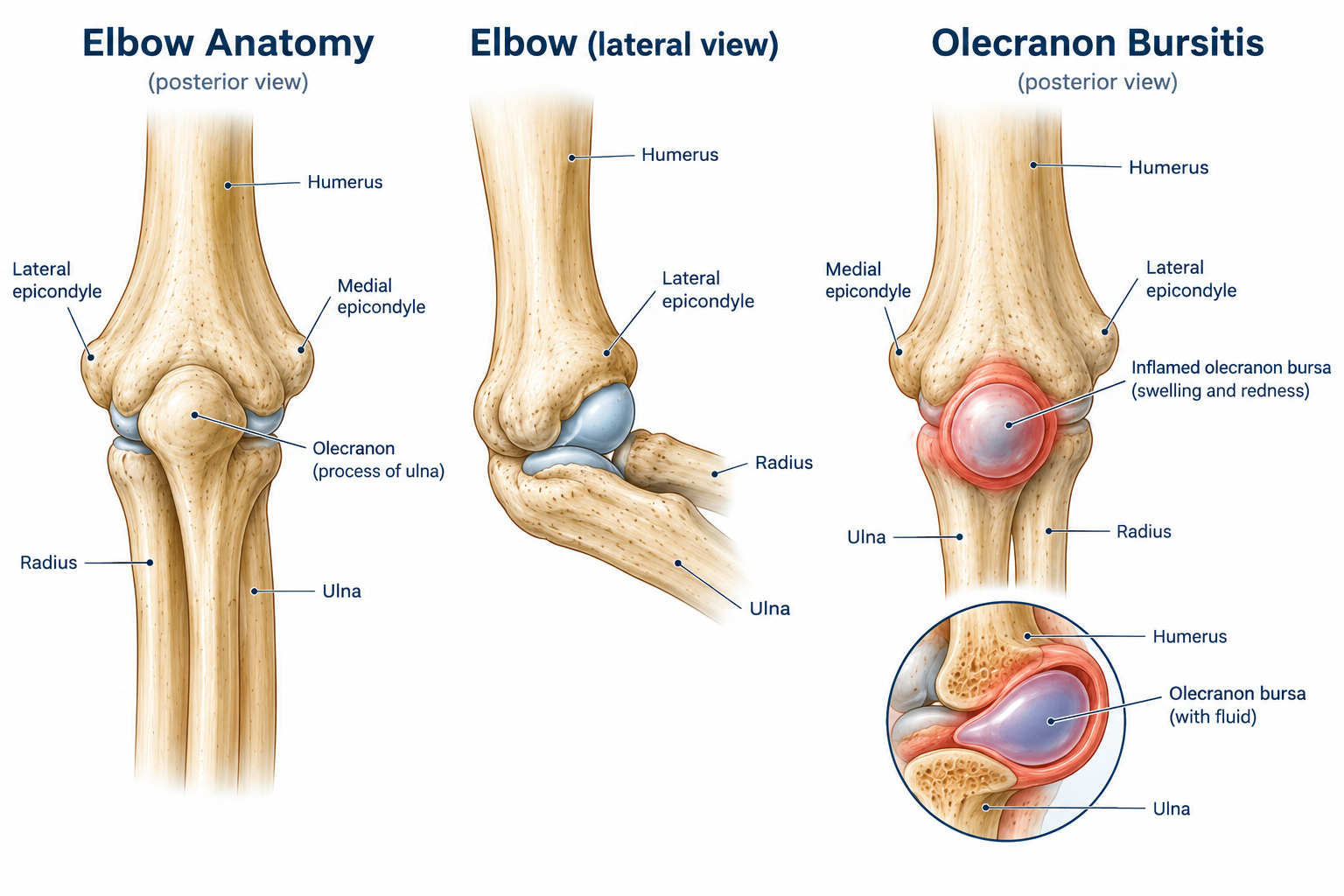
What Causes It?
The most common cause we see is prolonged or repeated pressure on the elbow — leaning on a desk, a workbench, or hard flooring for extended periods. It can also follow a direct knock or fall onto the elbow. Less commonly, bursitis develops secondary to an infection, which requires a different management approach and is something we specifically screen for during assessment.
Common Symptoms
Noticeable swelling right at the tip of the elbow
Tenderness or warmth over the swollen area
Pain with direct pressure, such as leaning on the elbow
Redness or heat in the area, particularly if infection is present
Relatively normal elbow movement, since bursitis doesn't usually restrict the joint itself
How We Diagnose It
Assessment includes a close look at the swelling, checking for warmth, redness, or fever that might indicate infection, alongside your recent history of pressure or trauma to the area. If there's any suspicion of infection, we'll refer you back to your GP promptly, since this needs medical management rather than physiotherapy alone. Straightforward, non-infected bursitis can usually be managed and monitored without further imaging.
How Physiotherapy Helps
For non-infected bursitis, management is largely about protecting the area from further pressure while the swelling settles, along with guidance on positions and activities to modify in the short term. We'll also help you identify what's been causing repeated pressure on the area — whether that's a work habit, a sleeping position, or a particular sport — so it doesn't simply return once the current flare-up resolves.
In more persistent or recurrent cases, we may liaise with your GP about further options, including aspiration of the fluid if the swelling is large and uncomfortable. Once the acute swelling has settled, we'll check your elbow's strength and movement to make sure nothing else has been affected during the flare-up.
For people whose bursitis keeps returning — often those in occupations involving a lot of kneeling, leaning, or elbow contact with hard surfaces — we'll spend extra time on practical prevention strategies, since repeated flare-ups are far more about ongoing pressure exposure than anything unusual about the bursa itself.
Self-Care While You Wait For Your Appointment
Avoid leaning on the elbow or applying direct pressure to the area, and consider using a soft padded sleeve if you can't avoid activities that involve some pressure. Ice can help reduce swelling and discomfort in the short term. If you notice increasing redness, warmth, fever, or the area becomes significantly more painful, seek medical attention promptly, as this can indicate infection.
Frequently Asked Questions
Is elbow bursitis serious?
Most cases are straightforward and settle with simple management, but it's worth having it assessed to rule out infection, which needs a different treatment approach.
Should I drain the fluid myself?
No — fluid should only be drained by a medical professional in appropriate circumstances, since doing this yourself carries a real risk of introducing infection.
How long does bursitis take to settle?
Straightforward cases often improve within two to six weeks with appropriate activity modification, though this can vary depending on how much ongoing pressure the area is exposed to.
Book an Elbow Assessment in Erina
If elbow bursitis is getting in the way of work, sport or everyday tasks, the sooner it's properly assessed, the sooner we can get you back to full grip strength. Our Erina team will give you a clear diagnosis, an honest treatment plan, and a realistic timeframe — no guesswork, no generic exercise sheets.
Call Thrive Physiotherapy or book online today to get started.
Not sure if this is what's causing your elbow pain? Visit our Elbow Physiotherapy hub page to see the full range of elbow conditions we treat.