

Distal Biceps Tendinopathy Physiotherapy — Erina & Central Coast
Pain at the front of your elbow, particularly with lifting or twisting your forearm, often points to the distal biceps tendon — the attachment point where your biceps muscle connects into your forearm just below the elbow crease. It's a less commonly discussed elbow condition than tennis or golfer's elbow, but one that's important to identify correctly, particularly when a tear is a possibility.
What Is Distal Biceps Tendinopathy?
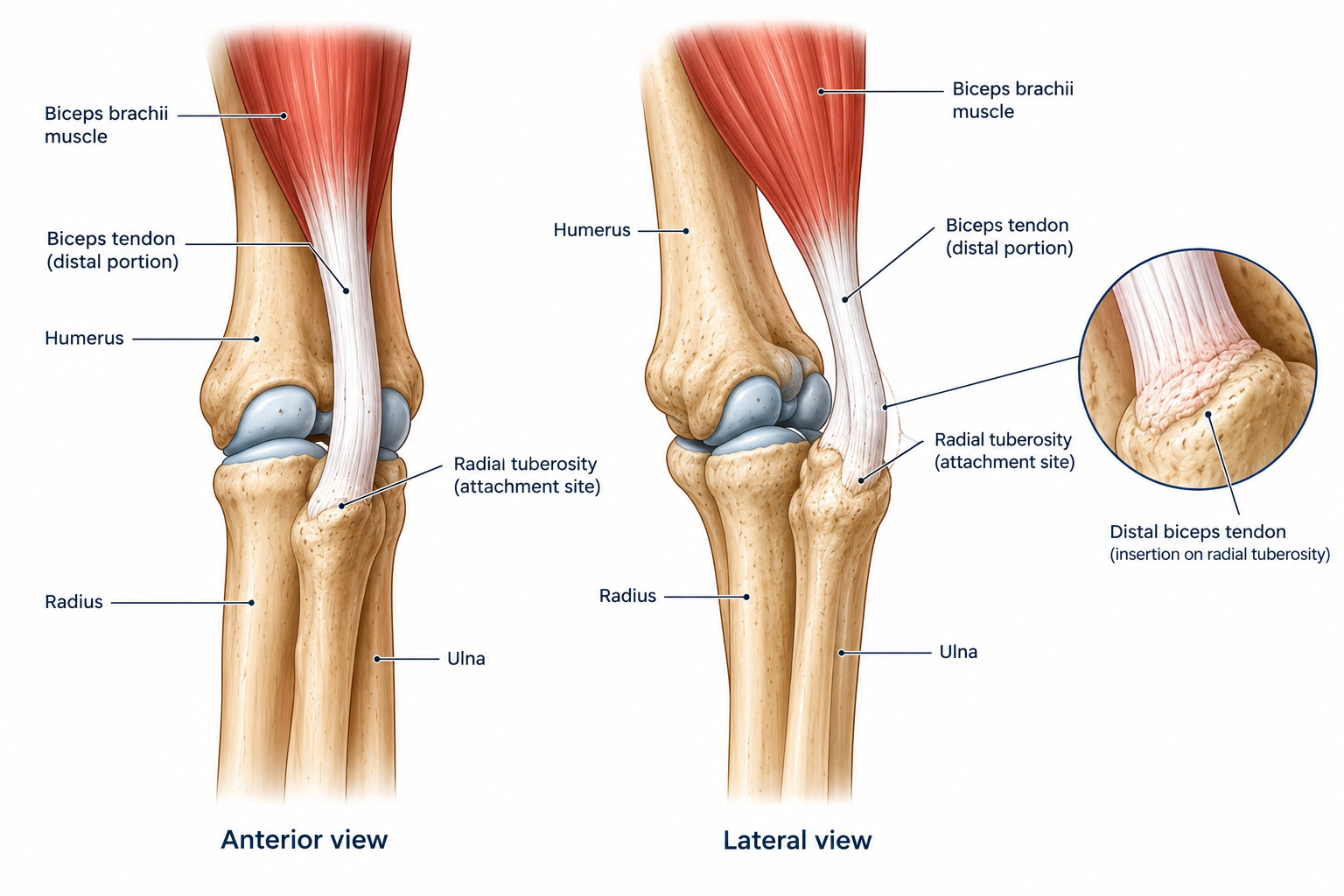
The distal biceps tendon attaches your biceps muscle to the radius bone in your forearm, allowing you to bend your elbow and rotate your forearm with power. Tendinopathy describes irritation and reduced load tolerance in this tendon, usually from repetitive or heavy lifting demands. In more significant cases, particularly from a single forceful event, the tendon can partially or fully tear away from its attachment, which is a different and more urgent problem.
What Causes It?
This is most common in people doing heavy manual lifting, particularly movements that combine a bent elbow with forearm rotation — think lifting a heavy object while twisting, or a sudden, forceful load through a bent arm. It's also seen in weightlifters and people who've had a rapid increase in heavy curling or pulling exercises. Full tears tend to happen suddenly, often with an audible pop and rapid bruising, rather than building up gradually like most tendon overload injuries.
Common Symptoms
Pain at the front of the elbow, sometimes radiating into the forearm
Weakness bending the elbow or rotating the forearm, particularly turning the palm upward
Discomfort with lifting, especially combined with a twisting motion
A visible or palpable change in the shape of the biceps muscle, more common with a full tear
Bruising around the elbow and forearm following a sudden, forceful injury
How We Diagnose It
Assessment includes specific strength and provocation tests for the biceps tendon, along with a close look at the shape and contour of the muscle to check for signs of a tear. Because a suspected full tear is one of the more time-sensitive elbow injuries — particularly if surgical repair is being considered — we'll typically recommend prompt imaging and a specialist opinion if the clinical picture suggests this is a possibility, rather than waiting to see how things progress.
How Physiotherapy Helps
For tendinopathy without a tear, treatment follows a similar approach to other tendon conditions — a progressive loading program that gradually rebuilds the tendon's capacity, combined with activity modification while the area settles. We'll pay close attention to movements that combine elbow bending with forearm rotation, since this combination tends to be the most provocative for this particular tendon.
If a tear is confirmed, management depends on the extent of the tear, your activity demands, and your goals. Some partial tears are managed conservatively with a structured rehab program, while full tears, particularly in younger or more active patients, are often referred for a surgical opinion. Either way, physiotherapy plays a significant role both before and after any surgical decision, focused on restoring strength and confidence in the arm.
Self-Care While You Wait For Your Appointment
If you suspect a sudden tear — particularly if you heard or felt a pop, followed by rapid bruising and weakness — avoid heavy lifting and seek assessment promptly rather than waiting. For milder, gradually developing symptoms, easing off on heavy lifting and twisting movements, along with icing if the area feels warm or inflamed, can help manage things in the short term.
Frequently Asked Questions
How do I know if I've torn my biceps tendon?
A sudden pop, rapid bruising, noticeable weakness, and a visible change in the shape of your biceps muscle are all signs suggesting a tear rather than simple tendinopathy. This warrants prompt assessment rather than a wait-and-see approach.
Do all biceps tendon tears need surgery?
Not necessarily, though full tears are often discussed with a specialist, particularly in younger or more active patients who want to maintain full strength for lifting and sport.
Can I still bend my elbow with this condition?
Usually yes, since other muscles also contribute to elbow bending, but you'll likely notice reduced strength, particularly with the forearm rotated palm-up.
Book an Elbow Assessment in Erina
If distal biceps tendon pain is getting in the way of work, sport or everyday tasks, the sooner it's properly assessed, the sooner we can get you back to full grip strength. Our Erina team will give you a clear diagnosis, an honest treatment plan, and a realistic timeframe — no guesswork, no generic exercise sheets.
Call Thrive Physiotherapy or book online today to get started.
Not sure if this is what's causing your elbow pain? Visit our Elbow Physiotherapy hub page to see the full range of elbow conditions we treat.