

Cubital Tunnel Syndrome Physiotherapy — Erina & Central Coast
Tingling or numbness in your ring and little fingers, particularly after bending your elbow for a while or first thing in the morning, is a classic sign of cubital tunnel syndrome. It's a nerve-related condition rather than a tendon or joint problem, which means it needs a slightly different approach to the more common tendon-based elbow complaints.
What Is Cubital Tunnel Syndrome?
The ulnar nerve — the nerve responsible for that unmistakable ‘funny bone’ sensation — runs around the inside of your elbow through a narrow passage called the cubital tunnel. When this nerve becomes compressed or irritated as it passes through, it can produce tingling, numbness, or weakness that's felt further down the arm in the ring and little fingers, rather than pain concentrated at the elbow itself.
Because the symptoms are often felt away from the elbow, people sometimes don't immediately connect their hand symptoms back to what's happening at the elbow, which is part of why a proper assessment is so useful in confirming where the problem is actually coming from.
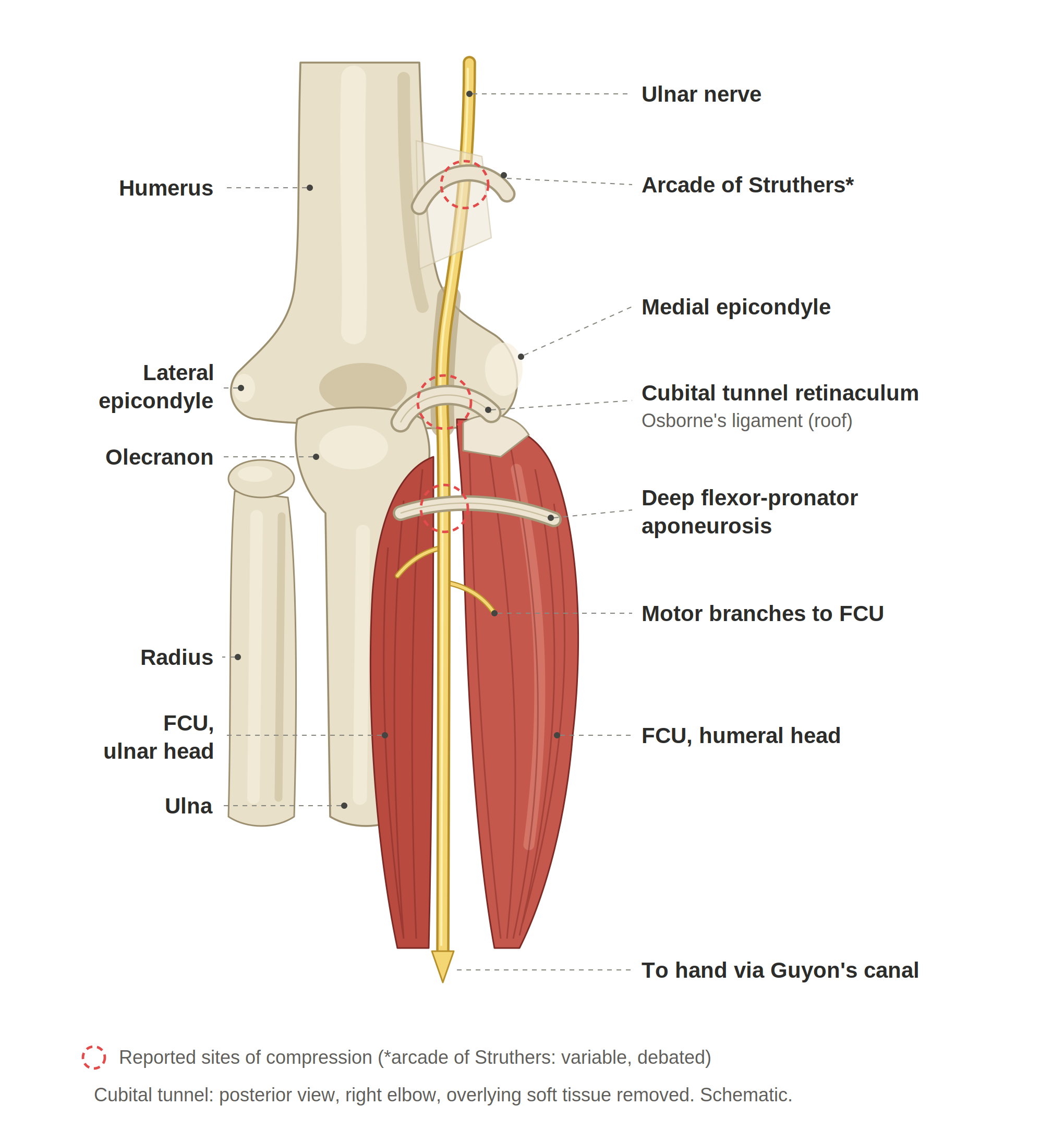
What Causes It?
Prolonged elbow bending is one of the most common contributors — think long phone calls, sleeping with the arm curled tightly against the chest, or desk setups that involve resting on a bent elbow for extended periods. Leaning directly on the inside of the elbow, previous elbow injury, and repetitive elbow bending in certain manual jobs can also increase pressure on the nerve over time.
Common Symptoms
Tingling or numbness in the ring and little fingers
Symptoms that are worse with prolonged elbow bending, such as during sleep
A feeling of weakness or clumsiness in the hand, particularly with fine motor tasks
Occasional aching on the inside of the elbow
Symptoms that ease with straightening the elbow and worsen again with bending
How We Diagnose It
Assessment includes specific tests that reproduce symptoms by positioning and gently tapping over the nerve at the elbow, along with an evaluation of grip and hand strength to check whether the nerve compression has started to affect muscle function. We'll also review your sleeping position, work setup, and any repetitive elbow bending in your daily routine, since these are often significant contributing factors. In more persistent or progressive cases, nerve conduction studies may be recommended to confirm the diagnosis and guide management.
How Physiotherapy Helps
Treatment usually starts with reducing the mechanical irritation to the nerve — practical strategies to keep the elbow straighter at night, adjustments to desk or workstation setup, and advice on avoiding prolonged pressure directly on the inside of the elbow. Nerve gliding exercises, done gently and specifically, can also help improve how the nerve moves through the cubital tunnel.
If symptoms are more advanced, or if there's associated weakness, we'll work closely with you to track progress carefully and involve your GP or a specialist promptly if things aren't improving as expected, since more significant or progressive nerve compression occasionally needs a surgical opinion. Catching and managing mild cases early gives you the best chance of avoiding that path altogether.
Self-Care While You Wait For Your Appointment
Try to avoid sleeping with your elbow bent tightly — a rolled towel or a light splint around the elbow at night can help some people keep it straighter. During the day, avoid resting directly on the inside of your elbow, and take regular breaks if your work or study involves long periods with your elbow bent, such as extended phone use or desk work.
Frequently Asked Questions
Will the tingling in my fingers go away?
In many cases, yes, particularly when caught early and managed with activity modification and nerve gliding exercises. More established or severe cases can take longer and occasionally need further specialist input.
Do I need surgery for cubital tunnel syndrome?
Most mild to moderate cases improve with conservative management. Surgery is generally reserved for more significant or progressive cases, particularly where there's ongoing weakness.
Why are my symptoms worse at night?
Many people unconsciously sleep with their elbow bent tightly, which increases pressure on the ulnar nerve for hours at a time — exactly the position most likely to aggravate cubital tunnel symptoms.
Book an Elbow Assessment in Erina
If cubital tunnel syndrome is getting in the way of work, sport or everyday tasks, the sooner it's properly assessed, the sooner we can get you back to full grip strength. Our Erina team will give you a clear diagnosis, an honest treatment plan, and a realistic timeframe — no guesswork, no generic exercise sheets.
Call Thrive Physiotherapy or book online today to get started.
Not sure if this is what's causing your elbow pain? Visit our Elbow Physiotherapy hub page to see the full range of elbow conditions we treat.