
Vestibular Migraines and How Physiotherapy Can Help
Most people have heard of migraines, but not everyone realises that migraines can cause dizziness and balance problems — even without the classic headache. This is known as a vestibular migraine, and it’s one of the most common causes of recurring dizziness.
If you’re living with vestibular migraines, you might experience:
Spinning or rocking sensations (vertigo)
Imbalance, especially in busy environments like supermarkets
Motion sensitivity (cars, scrolling on a screen, escalators)
Headache, light or sound sensitivity (but not always)
Fatigue and brain fog after an episode
These symptoms can last minutes to hours, and in some cases days, making daily life unpredictable.
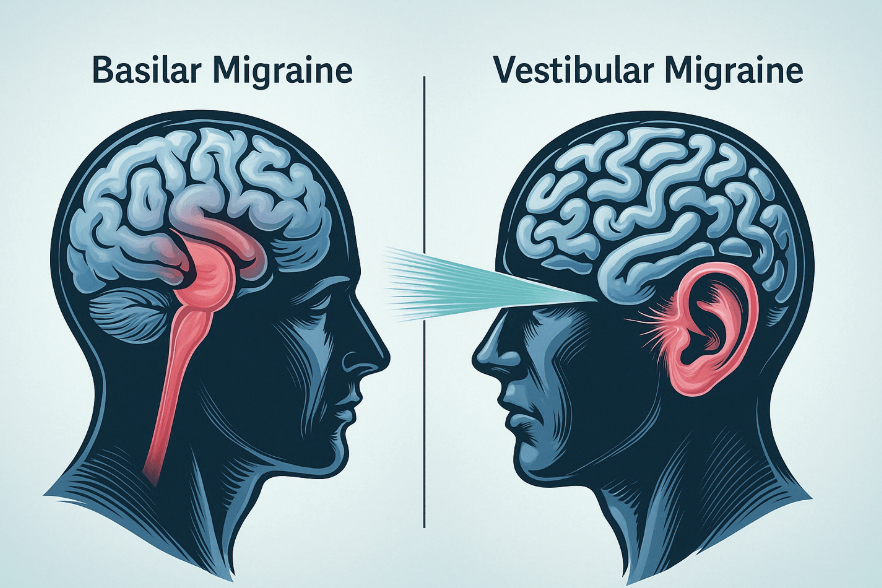
Why Do Vestibular Migraines Happen?
The exact cause isn’t fully understood, but vestibular migraines are thought to result from abnormal interactions between the brain’s migraine pathways and the inner ear balance system. Triggers vary from person to person, but common ones include:
Stress or fatigue
Hormonal changes
Certain foods (e.g., caffeine, red wine, aged cheese)
Bright lights or busy visual patterns
Lack of sleep
Where Physiotherapy Helps
While medical management (with a GP or neurologist) is often part of treatment, vestibular physiotherapy can play a big role in reducing dizziness, improving balance, and helping you feel more confident in daily life.
Here’s how:
1. Vestibular Rehabilitation Exercises
Just like with other vestibular conditions, the brain can be trained to adapt and cope better with dizzy signals. A physiotherapist can design a program of:
Gaze stability training (keeping vision steady when moving your head)
Balance retraining (so walking feels safer and steadier)
Habituation exercises (gradually reducing dizziness triggered by busy environments or head movements)
2. Reducing Motion Sensitivity
Scrolling on your phone, driving, or being a passenger in a car can be especially tough for vestibular migraine sufferers. Physios use specific strategies and graded exposure exercises to desensitise motion sensitivity, helping you feel more in control.
3. Managing Neck & Posture-Related Triggers
Neck tension and poor posture can contribute to migraine frequency and severity. Physiotherapists often address these with:
Manual therapy and gentle mobilisation
Postural retraining
Relaxation and breathing techniques
4. Building Confidence & Activity Tolerance
Many people start avoiding certain environments (like shopping centres, gyms, or social outings) because of fear of triggering symptoms. Physiotherapy provides a safe, graded way to rebuild activity tolerance and get back to the things you enjoy.
What to Expect at a Physio Appointment
At your first session, your physiotherapist will explore:
Your migraine and dizziness history
Common triggers and symptom patterns
Your balance, gait, and eye-head coordination
From there, you’ll receive a tailored exercise program to practice both in the clinic and at home. Education on lifestyle strategies, pacing, and symptom management is also a big part of treatment.
Key Takeaway
Vestibular migraines can be frustrating and exhausting, but with the right management, you can regain control. Physiotherapy helps reduce dizziness, improve balance, and build confidence in everyday activities.
If you’re struggling with vestibular migraines, our team offers specialist vestibular physiotherapy to help you move more freely and confidently. Get in touch today to start your recovery.