
Strength Training for Runners: Programs That Actually Improve Performance
Running more doesn’t always make you a better runner.
At Thrive Physio, we see it all the time: motivated runners logging the miles but still battling injuries, plateaus, or that feeling of “my legs just don’t have any pop.” The missing piece is often smart, targeted strength training—not random gym workouts or Instagram circuits, but programs that actually improve running performance.
Let’s break down what strength training should look like for runners, why it matters, and how to do it properly.
Why Strength Training Matters for Runners
Running is a repetitive, high-impact activity. Every stride places forces of 2–3 times your body weight through your joints. Strength training helps runners by:
Improving running economy (use less energy at the same pace)
Increasing force production for speed and hills
Reducing injury risk by improving tissue load tolerance
Correcting strength imbalances that lead to overuse injuries
Enhancing fatigue resistance late in races
Research consistently shows that runners who strength train improve performance without gaining unnecessary muscle mass—when it’s done correctly.
The Problem With Most Strength Programs for Runners
Many runners either:
Skip strength training altogether, or
Do generic workouts that don’t transfer to running
Common mistakes we see:
High-rep, low-load “burn” workouts that don’t build usable strength
Random exercises with no progression
Too much focus on core isolation and not enough on lower-limb strength
Strength sessions that clash with running intensity, leading to fatigue or injury
Effective strength training for runners needs to be specific, progressive, and time-efficient.
What Actually Works: Key Principles of Strength Training for Runners
1. Prioritise Heavy Strength (Yes, Really)
Runners benefit most from moderate to heavy resistance training, typically in the 3–6 rep range. This improves neuromuscular efficiency and force production without bulk.
Key lifts include:
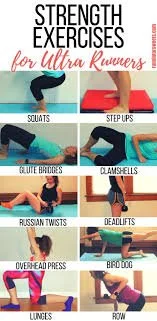
Squats (back, front, or goblet)
Deadlifts and Romanian deadlifts
Split squats and lunges
Step-ups
This type of training improves how much force you can apply into the ground with each stride—crucial for speed and efficiency.
2. Single-Leg Strength Is Non-Negotiable
Running is essentially a series of single-leg hops. Strength programs that ignore unilateral work leave performance on the table.
Effective single-leg exercises:
Bulgarian split squats
Single-leg Romanian deadlifts
Single-leg calf raises (loaded)
Step-downs and lateral lunges
These improve pelvic control, reduce asymmetries, and help prevent common running injuries like knee pain, Achilles tendinopathy, and shin splints.
3. Don’t Ignore Plyometrics (When You’re Ready)
Once a base of strength is established, plyometric training improves stiffness and elastic energy return—key for faster, more efficient running.
Examples include:
Hopping and bounding drills
Box jumps
Pogos
Skipping variations
These should be introduced gradually and tailored to your injury history and training phase.
4. Core Training Should Support Running, Not Replace Strength
Core work matters, but endless planks won’t fix performance issues.
Instead, focus on:
Anti-rotation and anti-extension exercises
Loaded carries
Integrated core control during compound lifts
Your core’s job is to transfer force efficiently, not just look good.
How Often Should Runners Strength Train?
For most runners, 2 sessions per week is the sweet spot.
Beginners or injury-prone runners may start with 1 session
Competitive runners may use 2–3 sessions during off-season or base phases
During race season, strength is maintained with lower volume
Consistency beats intensity every time.
Strength Training and Injury Prevention
At Thrive Physio, we don’t separate performance and injury prevention—they’re two sides of the same coin.
Strength training helps:
Tendons tolerate load better
Muscles absorb impact forces
Joints move through controlled ranges
Training errors become less damaging
Many common running injuries aren’t caused by “bad form,” but by tissues that simply aren’t strong enough for the workload.
Individualised Programs Get the Best Results
The best strength program for runners depends on:
Training volume and goals
Injury history
Current strength levels
Race distances
Time availability
A recreational runner training for their first 10km needs a very different program from a marathon runner chasing a PB.
That’s why cookie-cutter plans often fail.
How Thrive Physio Helps Runners Get Stronger and Faster
At Thrive Physio, we design individualised strength and conditioning programs that integrate seamlessly with your running.
Our approach includes:
Full movement and strength assessments
Running-specific strength programming
Injury-informed load management
Ongoing progressions based on your training cycle
Whether you’re coming back from injury or chasing performance gains, we make sure your strength training actually transfers to your running.
Ready to Run Stronger?
If you’re serious about improving your running performance—or tired of recurring injuries—strength training isn’t optional anymore.
Done right, it can be the difference between just running more… and running better.
Book an appointment with Thrive Physio today and let’s build a strength program that works for your running, not against it.