

If you've been told you have spondylolisthesis, or your back pain has been linked to a vertebra that's slipped slightly forward, it can sound more alarming than it usually needs to be. Many cases, both in younger athletic patients and older adults, are managed very successfully without surgery through a well-structured rehab program.
Spondylolisthesis Physiotherapy — Erina & Central Coast
What Is Spondylolisthesis?
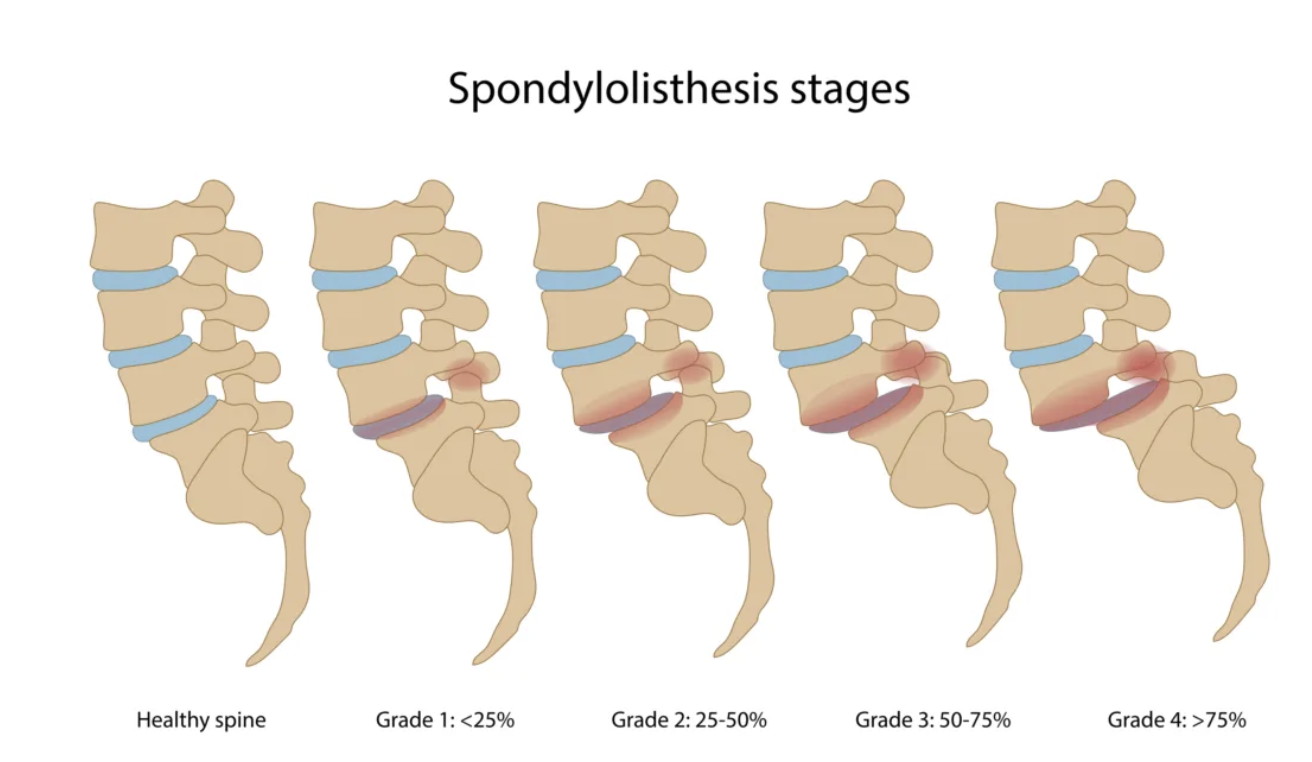
Spondylolisthesis occurs when one vertebra slips forward relative to the vertebra below it. In younger, more active patients, this is often related to a stress fracture in a small bony bridge at the back of the vertebra, sometimes from repetitive extension-based loading in sports like gymnastics, fast bowling, or dancing. In older patients, it's more often a gradual degenerative change related to wear in the discs and facet joints over time.
Severity is generally graded based on how far forward the vertebra has slipped, and importantly, the grade doesn't always correlate closely with how much pain or limitation someone experiences — some people with a more significant slip have minimal symptoms, while others with a milder slip are more affected.
What Causes It?
In younger patients, this usually relates to repetitive extension and rotation loading in sport, sometimes combined with a growth spurt that temporarily reduces bone strength relative to the load being placed on it. In older patients, gradual degenerative changes in the disc and facet joints reduce the spine's inherent stability at that level, allowing gradual forward slippage over years.
Common Symptoms
Low back pain, sometimes worse with extension-based movements
Tightness through the hamstrings, which is common with this condition
Occasional leg symptoms if a nerve becomes involved
Pain that worsens with prolonged standing or activity
In some cases, no symptoms at all, with the finding picked up incidentally on imaging
How We Diagnose It
Assessment includes a detailed history, particularly asking about sporting demands in younger patients, along with movement and strength testing focused on the lower back and hip region. X-rays, and sometimes more detailed imaging like an MRI or CT, are typically used to confirm the diagnosis and assess the grade of slip, particularly in younger athletes where an early stress fracture needs prompt, careful management.
How Physiotherapy Helps
Treatment centres on building strength and control through the deep core and spinal stabilising muscles, which directly supports the spine at the affected level and reduces reliance on the compromised bony structures alone. For younger athletes with a suspected stress fracture, this often starts with a period of modified activity to allow the bone to heal, followed by a careful, structured return to sport.
For degenerative spondylolisthesis in older patients, treatment focuses on building strength and managing symptoms for the long term, since the underlying slip itself won't be reversed but function and pain levels generally respond very well to the right program. We'll track your progress closely and involve your GP or a specialist if things aren't progressing as expected, particularly for younger athletes with a confirmed stress fracture.
Self-Care While You Wait For Your Appointment
For younger athletes with a suspected stress fracture, it's sensible to reduce or pause extension-heavy training — bowling, gymnastics, or similar activities — until you've been properly assessed. For general back pain associated with a known slip, gentle movement within a comfortable range, and avoiding excessive arching or heavy extension-based activity, is a reasonable interim approach.
Frequently Asked Questions
Does spondylolisthesis always need surgery?
No, most cases are managed successfully without surgery. Surgery is generally reserved for cases with significant, progressive slippage, ongoing nerve involvement, or symptoms that aren't responding to a well-run conservative program.
Can my child still play sport with this condition?
In many cases, yes, though it depends on the grade of slip and whether there's an active stress fracture. We'll guide you through a safe, structured return-to-sport plan based on the specific situation.
Will the vertebra keep slipping further?
In most cases, progression is minimal, particularly once appropriate strengthening is in place. We'll monitor your symptoms and function over time as part of your ongoing management.
Book a Lower Back Assessment in Erina
If spondylolisthesis is getting in the way of work, sleep or everyday life, the sooner it's properly assessed, the sooner we can get you moving with confidence again. Our Erina team will give you a clear diagnosis, an honest treatment plan, and a realistic timeframe — no guesswork, no generic exercise sheets.
Call Thrive Physiotherapy or book online today to get started.
Not sure if this is what's causing your back pain? Visit our Lumbar Spine Physiotherapy hub page to see the full range of lower back conditions we treat.