

If walking any real distance brings on heaviness, cramping, or pain in your legs — and bending forward or sitting down brings quick relief — spinal stenosis is a strong possibility. It's a condition we see often in our older patients, and while it can't be reversed, it can be managed very effectively without surgery in the large majority of cases.
Spinal Stenosis Physiotherapy — Erina & Central Coast
What Is Spinal Stenosis?
Stenosis describes a narrowing of the space around the spinal cord or nerve roots within the spine, most commonly caused by age-related changes including thickened ligaments, enlarged facet joints, and disc changes that gradually reduce the available space for the nerves. This narrowing can lead to nerve irritation, particularly with the spine in an extended, upright position, which compresses the available space further.
It's a genuinely common finding as people age, and having some degree of narrowing on a scan doesn't automatically mean it's the cause of your symptoms, or that it needs aggressive treatment. What matters is the relationship between the narrowing and your actual walking tolerance and function, which is exactly what a thorough clinical assessment helps clarify.
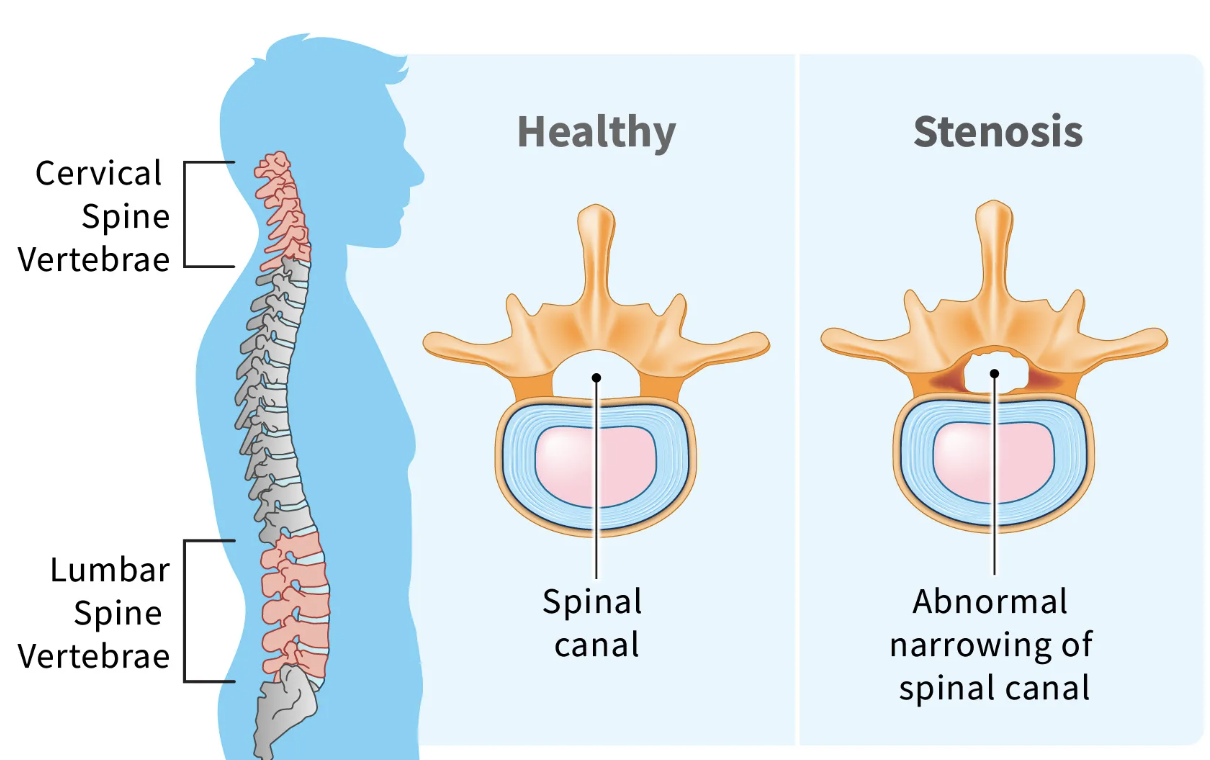
What Causes It?
Spinal stenosis is primarily related to age-related degenerative changes in the spine, developing gradually over years. It's more common in people over 60, and while it can't be prevented entirely, maintaining good core strength and spinal mobility throughout life appears to be protective against how significantly symptoms affect function. A history of previous back injury or surgery can also contribute to the changes that lead to stenosis developing at a particular level.
Common Symptoms
Leg pain, heaviness, or cramping that worsens with walking or standing
Symptoms that ease with sitting or bending forward, such as leaning on a shopping trolley
A tendency to find walking uphill or on flat ground harder than walking downhill or on a bike
Gradual reduction in walking distance before symptoms set in
Lower back stiffness, particularly with standing upright for extended periods
How We Diagnose It
The pattern of symptoms — worse with walking and standing, better with sitting and forward bending — is often distinctive enough to strongly suggest the diagnosis on its own. We'll also assess your walking tolerance, spinal movement, and any neurological signs in the legs. Imaging, typically an MRI, can help confirm the diagnosis and assess severity, particularly if symptoms are significantly affecting your function or if surgical options are being considered.
How Physiotherapy Helps
Treatment focuses on a combination of flexion-biased exercises, which tend to open up the available space for the nerves, along with a broader strengthening program for your core and legs to improve overall walking tolerance and function. We'll also help you find practical strategies — pacing, positioning, and sometimes the use of walking aids — that let you stay as active as possible within your current limits.
For most people, physiotherapy provides meaningful improvement in walking tolerance and quality of life without needing surgery. For more advanced cases significantly limiting function despite a good rehab effort, we'll discuss further options with your GP, including referral to a specialist to consider surgical decompression.
Self-Care While You Wait For Your Appointment
Walking with a slight forward lean, or using a support like a shopping trolley or walking poles, can help you cover more distance comfortably. Cycling is often well tolerated even when walking is limited, since the forward-leaning position tends to ease symptoms, and can be a useful way to maintain fitness in the meantime.
Frequently Asked Questions
Will spinal stenosis get worse over time?
It can progress gradually, though the rate varies significantly between individuals. Many people maintain good function for years with the right management, and progression doesn't automatically mean surgery becomes necessary.
Do I need surgery for spinal stenosis?
Most people manage well without surgery, particularly with a good strengthening and pacing program. Surgery is generally considered for cases with significant, persistent limitation despite conservative management.
Why does bending forward help my symptoms?
Forward bending tends to increase the available space around the nerves, which is why activities like cycling or leaning on a trolley often feel easier than standing upright or walking on flat ground.
Book a Lower Back Assessment in Erina
If spinal stenosis is getting in the way of work, sleep or everyday life, the sooner it's properly assessed, the sooner we can get you moving with confidence again. Our Erina team will give you a clear diagnosis, an honest treatment plan, and a realistic timeframe — no guesswork, no generic exercise sheets.
Call Thrive Physiotherapy or book online today to get started.
Not sure if this is what's causing your back pain? Visit our Lumbar Spine Physiotherapy hub page to see the full range of lower back conditions we treat.