

Shoulder Impingement Physiotherapy — Erina & Central Coast
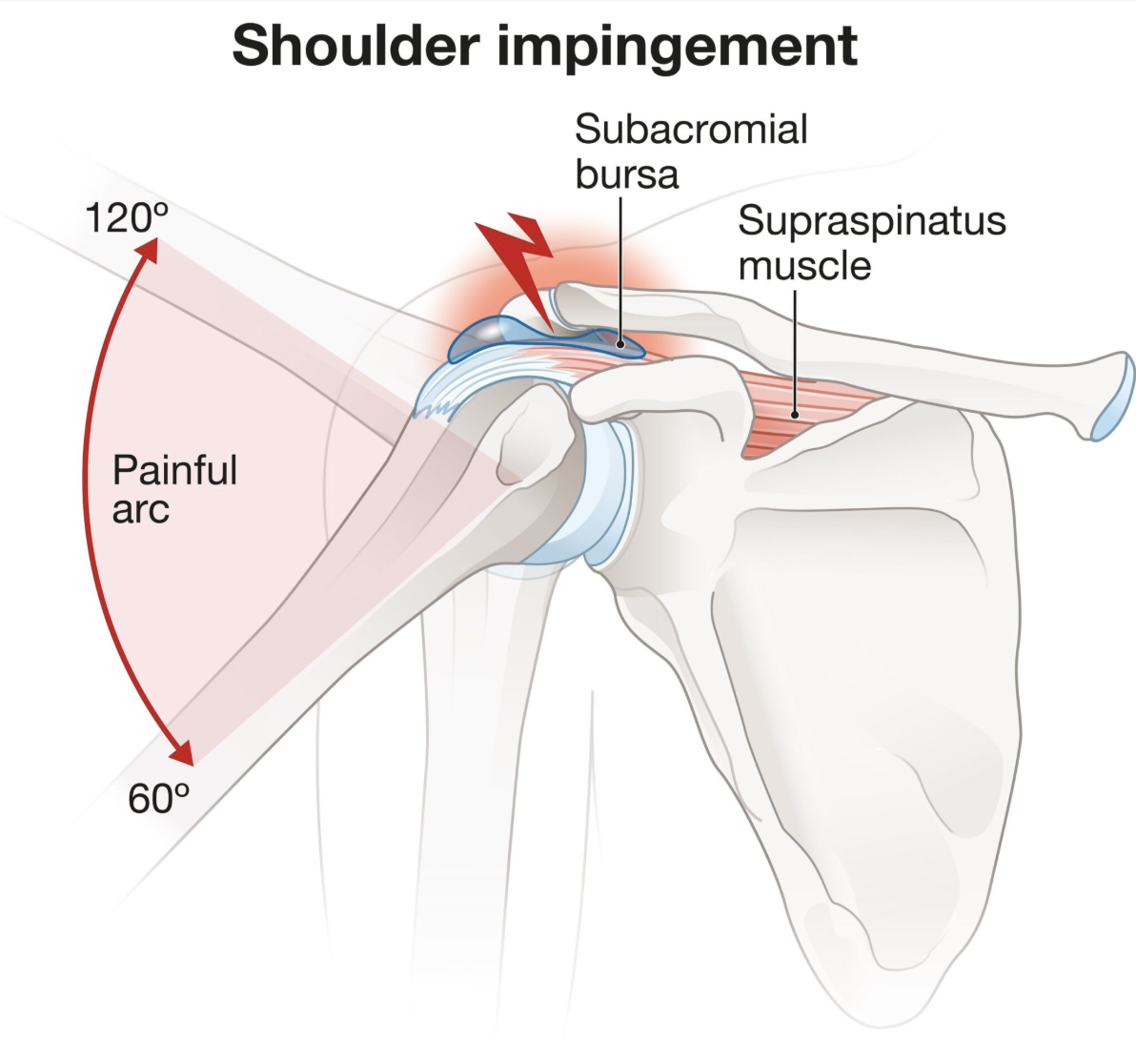
If lifting your arm out to the side causes a sharp catch somewhere in the middle of the movement — then eases again once your arm is fully overhead — you're describing a very classic pattern of shoulder impingement. It's one of the more mechanical shoulder problems we see, and one that usually responds well once we identify exactly what's getting pinched and why.
What Is Shoulder Impingement?
Impingement happens when the rotator cuff tendons, or the bursa that cushions them, get compressed under the bony arch at the top of your shoulder blade during certain arm movements. It's not usually about one structure being fundamentally damaged — it's more about the available space in that area being reduced, often due to how the shoulder blade and rotator cuff are working together (or not working together) during movement.
It's worth knowing that the shape of that bony arch varies naturally from person to person, and some people are simply built with a little less room to spare. That's not something we can change, but it does mean the movement quality and control around the joint carries even more weight in keeping symptoms away, which is exactly where physiotherapy tends to make the biggest difference.
What Causes It?
We see impingement frequently in swimmers, painters, tradies working above shoulder height, and gym-goers who've increased their overhead pressing volume. Poor shoulder blade control is a major contributing factor — if your shoulder blade isn't rotating properly as your arm lifts, the space available for your rotator cuff tendons shrinks at exactly the point they need it most. Tightness through the upper back and chest, along with general postural habits, often play a supporting role too.
Common Symptoms
A painful arc somewhere between shoulder and ear height when lifting the arm sideways
Pain reaching overhead, particularly the initial part of the movement
Discomfort reaching behind your back or across your body
A pinching or catching sensation rather than a constant deep ache
Pain that's noticeably worse with repetitive overhead activity
How We Diagnose It
We assess your shoulder's range of movement, run specific tests designed to reproduce the impingement pattern, and closely examine how your shoulder blade is moving throughout the whole arc — not just at the point where it hurts. This helps us work out whether the tendons themselves are irritated, whether it's primarily a movement control issue, or a combination of both, which changes the treatment approach considerably.
How Physiotherapy Helps
Treatment typically starts with easing the current irritation through activity modification and, where appropriate, hands-on treatment to reduce muscle tension around the shoulder and upper back. From there, we focus heavily on retraining shoulder blade control — exercises that improve how your shoulder blade rotates and stabilises as your arm lifts, which directly increases the space available for your rotator cuff. We'll also address any tightness through the chest and upper back that's limiting your overall shoulder mechanics.
For gym-goers and swimmers, we'll work through your specific technique and program to identify what's likely driving the overload, so you're not just treating the symptom and walking straight back into the same pattern.
Because impingement is so closely tied to movement quality rather than a single damaged structure, a big part of your program is learning to notice and correct the pattern yourself — so the improvements hold up long after you've finished your course of treatment with us.
Self-Care While You Wait For Your Appointment
Temporarily reducing overhead reps and load, particularly at the top of pressing movements, will usually take some of the sting out of daily symptoms. Stretching through the chest and upper back can also help, though it's worth avoiding aggressive overhead stretching until you've had a proper assessment, since this can sometimes aggravate an already irritated area rather than help it.
Frequently Asked Questions
Can I still go to the gym with shoulder impingement?
In most cases, yes, with some temporary adjustments to which movements and angles you're loading. We'll help you keep training while giving the irritated structures a chance to settle.
Is impingement the same as a rotator cuff tear?
No — impingement is a mechanical compression issue, while a tear is structural damage to the tendon itself. They can occur together, which is part of why a proper assessment matters before assuming which one you're dealing with.
Why does my shoulder only hurt partway through the movement?
That painful arc is a hallmark of impingement — it reflects the point in the movement where the available space is smallest. Once your arm clears that point, the compression eases and pain often settles again.
Book a Shoulder Assessment in Erina
If shoulder impingement is getting in the way of work, training or sleep, the sooner it's properly assessed, the sooner we can get you moving normally again. Our Erina team will give you a clear diagnosis, an honest treatment plan, and a realistic timeframe — no guesswork, no generic exercise sheets.
Call Thrive Physiotherapy or book online today to get started.Not sure if this is what's causing your shoulder pain? Visit our Shoulder Physiotherapy hub page to see the full range of shoulder conditions we treat.