

Shoulder Bursitis Physiotherapy — Erina & Central Coast
A shoulder that's suddenly become sharp, guarded, and painful to lie on — sometimes seemingly overnight — often points to bursitis. It can feel alarming when it flares up quickly, but bursitis is a well-understood condition, and most people respond well to the right early management.
What Is Shoulder Bursitis?
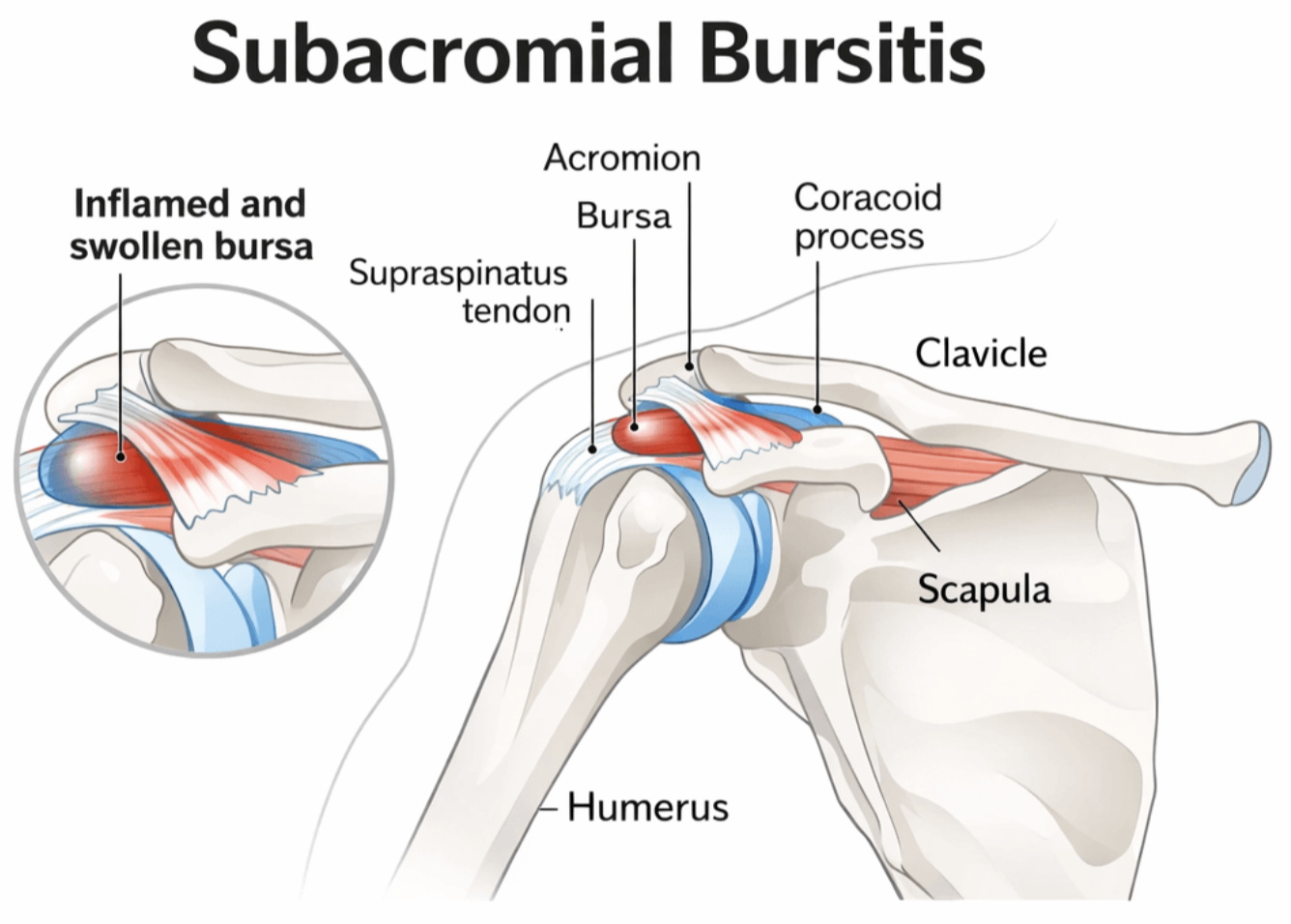
The subacromial bursa is a small, fluid-filled sac that sits between your rotator cuff tendons and the bone above, allowing everything to glide smoothly as you move your arm. When it becomes inflamed — usually from repetitive friction, overload, or sometimes a direct knock — it can swell and become tender, making even small movements uncomfortable. Bursitis frequently develops alongside other shoulder issues like impingement or rotator cuff tendinopathy rather than occurring entirely on its own.
Because the bursa sits so close to the rotator cuff tendons, it's common for the two to be irritated together, and it's not always obvious to the person experiencing it which one started the problem. That distinction matters for treatment, which is exactly why a proper assessment — rather than guesswork or general advice — makes such a difference to how quickly things settle.
What Causes It?
Repetitive overhead movement is the most common trigger, particularly when it's a sudden increase rather than a gradual build-up — a big weekend of painting, an unusually heavy training block, or a return to a sport after time off. It can also follow a fall or a knock directly onto the shoulder. In some cases, bursitis develops as a secondary reaction to an underlying rotator cuff problem that's been present for a while without being addressed.
Common Symptoms
Sharp, guarded pain rather than a dull ache
Tenderness to touch over the top or side of the shoulder
Pain lying on the affected side, often disturbing sleep
Discomfort with almost any shoulder movement during a flare-up
Symptoms that came on relatively quickly rather than building slowly over months
How We Diagnose It
Diagnosis is based on your history, the pattern and location of pain, and specific tests that help distinguish bursitis from other shoulder conditions it commonly overlaps with. Because bursitis often coexists with rotator cuff issues, part of our assessment is working out whether the bursa is the primary problem or a symptom of something else that needs addressing at the same time.
How Physiotherapy Helps
In the acute, irritable stage, the priority is calming things down — activity modification, guidance on positions and movements to avoid temporarily, and hands-on treatment to ease pain and reduce compensatory muscle tension. We'll also give you practical advice on sleeping positions, since night pain is often one of the most disruptive symptoms.
Once the acute irritation has settled, we shift focus to identifying and correcting whatever's been overloading that area in the first place — usually a combination of shoulder blade control, rotator cuff strength, and movement technique. Skipping this second phase is a common reason bursitis flares up again a few months down the track, so we treat it as a genuine priority rather than an afterthought once the pain has eased.
Most people move through the acute phase reasonably quickly with the right early management, though the underlying strength and control work that prevents a repeat flare-up typically takes a few more weeks to properly bed in.
Self-Care While You Wait For Your Appointment
Icing the area in short bursts can help take the edge off an acute flare, and avoiding positions that compress the shoulder — like lying directly on it, or reaching overhead — will generally keep symptoms more manageable in the meantime. Try to keep some gentle, pain-free movement going rather than holding the arm completely still, as prolonged stiffness can sometimes make the next stage of rehab slower to get going.
Frequently Asked Questions
Should I ice or heat a bursitis flare-up?
Ice is generally more helpful during an acute, sharp flare-up, while heat can be useful later to ease general muscle tension. We'll give you specific guidance based on how your shoulder is presenting.
Do I need a cortisone injection for bursitis?
Not always — many cases settle well with physiotherapy and activity modification alone. For more stubborn or severe flare-ups, an injection combined with physiotherapy can be a reasonable option, and we're happy to discuss this with your GP if needed.
Why did my bursitis come on so suddenly?
Bursitis often flares quickly even when the underlying overload has been building for a while, since the bursa can tip from coping to inflamed fairly abruptly once it's pushed past its threshold.
Book a Shoulder Assessment in Erina
If shoulder bursitis is getting in the way of work, training or sleep, the sooner it's properly assessed, the sooner we can get you moving normally again. Our Erina team will give you a clear diagnosis, an honest treatment plan, and a realistic timeframe — no guesswork, no generic exercise sheets.
Call Thrive Physiotherapy or book online today to get started.
Not sure if this is what's causing your shoulder pain? Visit our Shoulder Physiotherapy hub page to see the full range of shoulder conditions we treat.