

Rotator Cuff Tendinopathy Physiotherapy — Erina & Central Coast
If reaching overhead, lifting a bag of groceries, or rolling onto your side at night has started sending a deep ache through your shoulder, there's a good chance your rotator cuff is involved. Rotator cuff tendinopathy is one of the most common shoulder complaints we see at Thrive Physiotherapy in Erina, and the good news is that it responds very well to the right kind of treatment.
What Is Rotator Cuff Tendinopathy?
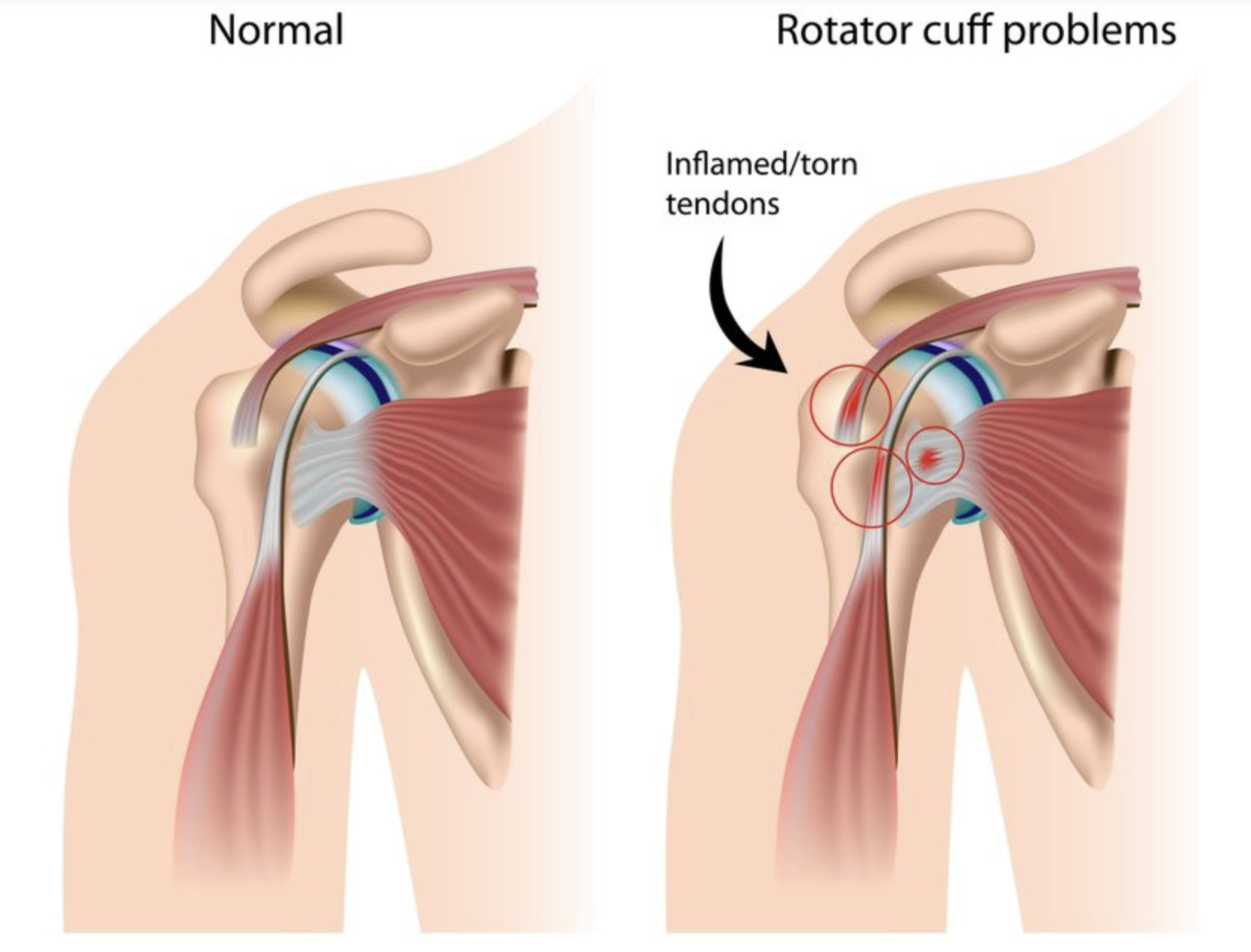
Your rotator cuff is a group of four small muscles and tendons that wrap around your shoulder joint, keeping it stable while your bigger muscles do the heavy lifting. Tendinopathy simply means these tendons have been asked to do more than they can currently cope with, and they've started to react — becoming irritated, thickened, and less tolerant of load. It's not a tear and it's not ‘wear and tear’ in the way people often imagine; it's more like the tendon has fallen behind on its fitness and needs a structured way to catch back up.
What Causes It?
Rotator cuff tendinopathy usually builds up gradually rather than appearing after one specific incident. We see it often in people who've recently increased their gym volume, tradies doing repetitive overhead work, painters, plasterers, and anyone who's spent a few too many weekends up a ladder. It's also common in people who've simply had a change in routine — more time at a desk with rounded shoulders, less overall activity, then a sudden return to lifting or sport without easing back in. Age plays a role too; tendons naturally become somewhat less tolerant of sudden load changes as we get older, which is part of why this is such a common complaint from the mid-thirties onward.
Common Symptoms
Rotator cuff tendinopathy has a fairly recognisable pattern once you know what to look for:A dull, deep ache on the outside or front of the shoulderPain that worsens with lifting the arm out to the side, especially between shoulder and ear heightDiscomfort lying on the affected side at nightA noticeable drop-off in strength for pressing or lifting movementsPain that flares after activity rather than during it, sometimes the next morning
How We Diagnose It
Diagnosis is almost always clinical — a detailed history combined with specific strength and movement tests that isolate each part of the rotator cuff. This tells us not just that the tendon is involved, but how irritable it currently is, which shapes exactly how hard we can push your rehab from day one. Imaging isn't usually necessary; in fact, scans in people without any pain at all frequently show rotator cuff changes, so an image alone rarely tells the full story.
How Physiotherapy Helps
Treatment centres on progressive loading — giving the tendon a structured, gradually increasing challenge so it rebuilds its tolerance rather than staying fragile. In the early stages, this might mean easing pain with hands-on treatment and modifying the activities that are flaring things up. As things settle, we move into a strength program that specifically targets the rotator cuff and the muscles around your shoulder blade, since poor shoulder blade control is a common hidden contributor. We'll also look at your training or work setup to make sure you're not walking straight back into the same overload once you're feeling better.Most people notice a genuine shift in pain within a few weeks, though full strength and load tolerance typically takes longer to rebuild — rushing this stage is one of the most common reasons rotator cuff pain becomes a repeat visitor. We'll give you a clear sense of what each stage of your recovery should feel like, so you know the difference between normal muscle fatigue and a sign to back off.
Self-Care While You Wait For Your Appointment
A few sensible adjustments can take the edge off in the meantime. Avoid sleeping directly on the sore shoulder where possible, and try propping a pillow under the arm for support. Ease back on any activity that consistently reproduces the pain — particularly overhead lifting or pressing — without stopping movement altogether, since gentle, pain-free range of motion is generally helpful rather than harmful. Over-the-counter pain relief can help manage symptoms in the short term, but it won't address the underlying tendon capacity issue, which is where a structured rehab program comes in.
Frequently Asked Questions
Can I keep training with rotator cuff tendinopathy?
Usually yes, with some modification. Complete rest tends to make tendons less tolerant of load, not more, so we'll help you find the version of training that keeps you active without aggravating things further.
Will it go away on its own?
Sometimes mild cases settle with activity modification alone, but more persistent tendinopathy generally needs a structured loading program to fully resolve — without it, it's common for symptoms to plateau or flare up again under load.
How is this different from a rotator cuff tear?
Tendinopathy is an overload reaction in the tendon tissue itself, while a tear involves an actual structural break in the fibres. The two can feel similar and sometimes coexist, which is exactly why a proper assessment matters before assuming which one you're dealing with.
Book a Shoulder Assessment in Erina
If rotator cuff pain is getting in the way of work, training or sleep, the sooner it's properly assessed, the sooner we can get you moving normally again. Our Erina team will give you a clear diagnosis, an honest treatment plan, and a realistic timeframe — no guesswork, no generic exercise sheets.
Call Thrive Physiotherapy or book online today to get started.Not sure if this is what's causing your shoulder pain? Visit our Shoulder Physiotherapy hub page to see the full range of shoulder conditions we treat.