

Peroneal Tendinopathy Physiotherapy — Erina & Central Coast
Pain behind and below the outer ankle bone, particularly on uneven ground or after a previous ankle sprain that never quite felt the same afterward, often points to the peroneal tendons. It's a condition that's frequently missed or mistaken for lingering sprain symptoms, which is exactly why an accurate diagnosis matters.
What Is Peroneal Tendinopathy?
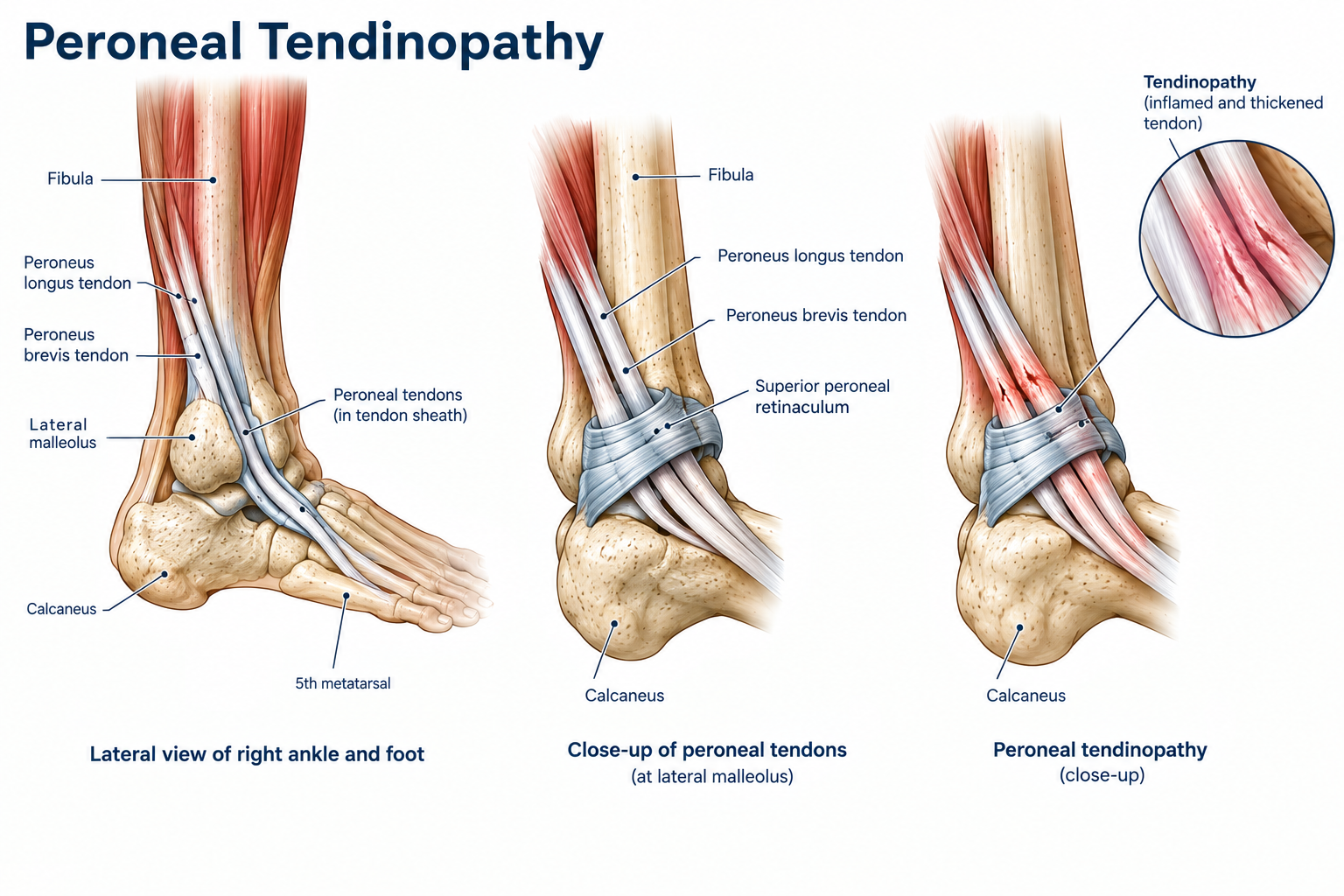
The peroneal tendons run along the outside of your lower leg and behind the outer ankle bone, playing an important role in controlling side-to-side ankle stability and supporting the outer arch of your foot. Tendinopathy describes an overload injury to these tendons, where they've been asked to compensate for more instability or load than they can currently handle, most commonly following an ankle sprain that hasn't been fully rehabilitated.
Because this condition so often develops as a consequence of an earlier ankle sprain, it can be easy to write off ongoing outer ankle pain as simply lingering sprain symptoms. In reality, the two are related but distinct problems, and treating only the original sprain without addressing the peroneal tendon overload tends to leave symptoms only partially resolved.
What Causes It?
The most common cause we see is ongoing ankle instability following a previous sprain, where the peroneal tendons end up working harder than normal to compensate for reduced ligament support. It's also seen in runners and hikers on uneven or cambered terrain, and in people with a foot posture that places extra strain on the outer ankle structures.
Common Symptoms
Pain and sometimes swelling behind and below the outer ankle bone
Discomfort walking on uneven ground or trails
A sense of ankle instability, particularly if there's a history of previous sprains
Pain that worsens with repetitive ankle movement or push-off during walking
Tenderness with direct pressure along the tendon path
How We Diagnose It
Assessment includes specific strength and resistance tests for the peroneal tendons, along with an evaluation of overall ankle stability, since this condition so frequently develops secondary to previous ligament injury. We'll also assess your foot posture and walking pattern for contributing factors. Imaging is occasionally used for more persistent cases or where the diagnosis isn't clear, but most cases are identified clinically.
How Physiotherapy Helps
Treatment centres on a progressive strengthening program for the peroneal tendons, combined with broader ankle stability work if there's an underlying history of ligament laxity or previous sprains that hasn't been fully addressed. Addressing this underlying instability is important, since simply calming down the tendon without improving overall ankle stability tends to lead to the same overload pattern returning.
For people managing ongoing symptoms on uneven terrain, we'll also look at footwear and, where appropriate, discuss supportive strapping or bracing during aggravating activities while the strengthening program takes effect.
Self-Care While You Wait For Your Appointment
Reducing activity on uneven or cambered surfaces in the short term will help manage symptoms. Supportive footwear with good lateral stability can also help. If you have a history of previous ankle sprains and ongoing instability, it's worth mentioning this specifically at your assessment, since it's often central to understanding what's driving your current symptoms.
Frequently Asked Questions
Is this related to my old ankle sprain?
Very possibly. Peroneal tendinopathy commonly develops secondary to ongoing ankle instability following a previous sprain that wasn't fully rehabilitated, which is why we'll assess your overall ankle stability, not just the tendon itself.
Can I keep walking or hiking with this condition?
Often yes, with some modification to terrain and distance in the short term. We'll help you find a sensible approach while addressing the underlying strength and stability issues.
How long does peroneal tendinopathy take to resolve?
Many cases improve within six to twelve weeks with a proper strengthening program, though this can take longer if there's significant underlying ankle instability that also needs addressing.
Can peroneal tendinopathy cause my ankle to feel unstable?
Yes, since these tendons play an active role in ankle stability, ongoing irritation or weakness here can contribute to a feeling of instability, separate from any ligament laxity that may also be present.
Book an Ankle & Foot Assessment in Erina
If peroneal tendon pain is getting in the way of walking, training or work, the sooner it's properly assessed, the sooner we can get you moving with confidence again. Our Erina team will give you a clear diagnosis, an honest treatment plan, and a realistic timeframe — no guesswork, no generic exercise sheets.
Call Thrive Physiotherapy or book online today to get started.
Not sure if this is what's causing your ankle or foot pain? Visit our Ankle & Foot Physiotherapy hub page to see the full range of conditions we treat.