

If your back pain is worse when you arch backward, twist, or stand up after sitting for a while, and feels close to the spine rather than travelling down your leg, facet joint pain is a strong possibility. It's one of the more common sources of mechanical back pain we see, and generally responds well to targeted treatment.
Facet Joint Pain Physiotherapy — Erina & Central Coast
What Is Facet Joint Pain?
The facet joints are small paired joints at the back of each level of your spine, guiding and limiting movement as you bend, extend, and rotate. Like any joint in the body, they can become irritated, inflamed, or develop degenerative changes over time, producing pain that's typically felt close to the spine itself, sometimes on one side more than the other.
Facet joint pain can occasionally refer into the buttock or upper thigh, which sometimes leads to confusion with sciatica, even though the underlying mechanism — a joint problem rather than nerve compression — is quite different. Unlike nerve-related pain, facet joint referral doesn't usually travel below the knee or come with numbness or tingling.
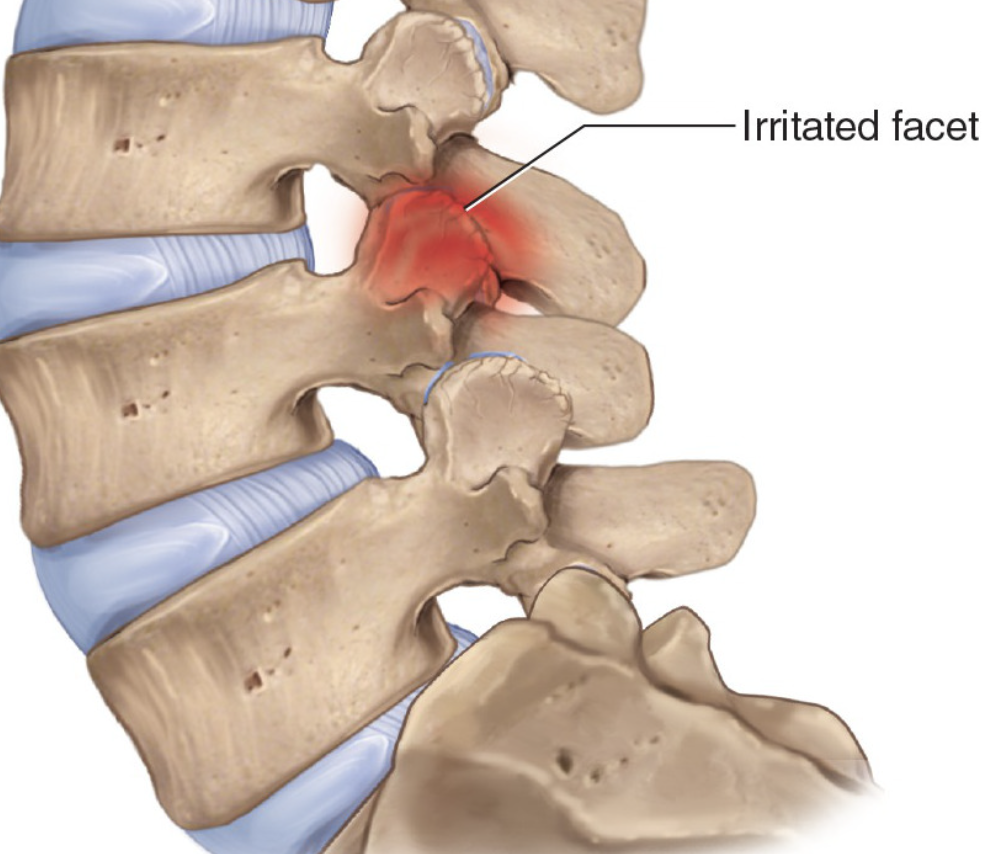
What Causes It?
Facet joint irritation often follows a specific movement, such as reaching overhead into a cupboard, an awkward twist while gardening, or an extension-based movement like a hard tennis serve. It can also develop more gradually, particularly in people who spend a lot of time in extended postures, or as part of general age-related changes in the spine. Occupations or sports involving repeated backward bending, such as certain manual trades or cricket fast bowling, tend to place extra cumulative load through these joints over time.
Common Symptoms
Pain close to the spine, often on one side
Pain that worsens with arching backward or twisting
Stiffness that's worse first thing in the morning
Discomfort standing up from sitting, particularly after prolonged sitting
Occasional referred pain into the buttock or upper thigh
How We Diagnose It
Assessment includes specific movement tests that reproduce pain through extension and rotation, along with hands-on palpation of the facet joints themselves. We'll also check for any signs of nerve involvement to help distinguish facet joint pain from disc-related or nerve-related presentations, since the treatment approach differs somewhat between the two. Imaging is rarely needed to confirm the diagnosis.
How Physiotherapy Helps
Treatment typically starts with hands-on techniques to ease pain and restore movement, combined with guidance on which positions and movements to modify temporarily while things settle. As pain eases, we shift focus to addressing the underlying movement patterns and strength deficits that led to the joint becoming overloaded in the first place, since this is usually what prevents a repeat flare-up.
For facet-related pain linked to prolonged extended postures — certain work setups, or specific sports involving repeated backward bending — we'll also look at practical modifications to reduce ongoing strain on the joints while you build up the surrounding strength and control.
Self-Care While You Wait For Your Appointment
Avoiding prolonged extended positions and sudden twisting movements will generally help reduce irritation in the short term. Gentle movement within a comfortable range, rather than complete rest, tends to help keep the joints from becoming overly stiff while you wait for your assessment.
Frequently Asked Questions
Is facet joint pain the same as arthritis?
Not necessarily. Facet joint pain can occur from a simple sprain-type irritation without any significant degenerative change, though ongoing degenerative changes in the joints can also be a contributing factor, particularly in older patients.
How is this different from sciatica?
Facet joint pain is a joint-based problem typically felt close to the spine, while sciatica involves nerve irritation producing symptoms that travel further down the leg. The two can sometimes overlap, which is why a proper assessment matters.
Can facet joint pain be prevented?
Maintaining good core and back strength, along with reasonable movement variety rather than prolonged static postures, is the most effective way to reduce the risk of repeated flare-ups.
Does facet joint pain show up on an X-ray or MRI?
Sometimes, particularly if there are degenerative changes present, but imaging findings don't always correlate closely with symptoms, and many people with facet joint pain have relatively unremarkable scans. Clinical assessment remains the main way we confirm this diagnosis.
Book a Lower Back Assessment in Erina
If facet joint pain is getting in the way of work, sleep or everyday life, the sooner it's properly assessed, the sooner we can get you moving with confidence again. Our Erina team will give you a clear diagnosis, an honest treatment plan, and a realistic timeframe — no guesswork, no generic exercise sheets.
Call Thrive Physiotherapy or book online today to get started.
Not sure if this is what's causing your back pain? Visit our Lumbar Spine Physiotherapy hub page to see the full range of lower back conditions we treat.