
Footstrike Patterns: What They Mean & When They Matter
If you’ve ever been told you heel strike too much or that you should be landing on your forefoot, you’re not alone. Footstrike patterns are a hot topic in running, walking, and injury prevention — and they’re often oversimplified.
At Thrive Physio, we regularly see people who are worried that the way their foot hits the ground is the reason for their pain. Common questions we hear include:
Is my footstrike causing my injury?
Should I change how I run or walk?
Is there a “better” footstrike pattern?
Let’s break it down in a clear, evidence-based way — without the hype.
What Is a Footstrike Pattern?
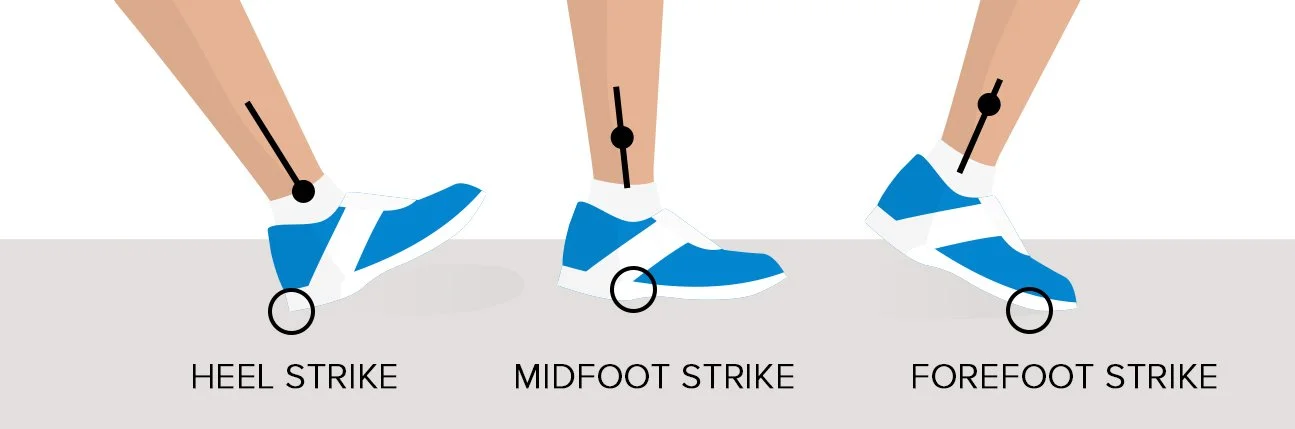
A footstrike pattern refers to which part of your foot makes contact with the ground first when you walk or run. There are three main types:
1. Heel Strike (Rearfoot Strike)
The heel makes contact with the ground first.
This is very common, especially during walking and recreational running.
Common in:
Walking
Long-distance running
Runners wearing cushioned shoes
👉 At Thrive Physio, we want to be clear: heel striking is normal and not automatically a problem.
2. Midfoot Strike
The heel and ball of the foot land at roughly the same time.
Common in:
Some runners
Faster running speeds
People with a naturally shorter stride
Midfoot striking often gets praised online, but it isn’t inherently superior — it’s just different.
3. Forefoot Strike
The ball of the foot lands first, with the heel touching down later or sometimes not at all.
Common in:
Sprinting
Uphill running
Some elite or minimalist runners
This pattern shifts load away from the knee and toward the calf and Achilles tendon.
Does Footstrike Pattern Actually Matter?
Sometimes — but not as much as people think.
Your footstrike pattern influences how forces move through your body, but it does not automatically predict injury.
Research shows:
No single footstrike pattern prevents injuries
Many runners stay injury-free with very different footstrike styles
Changing footstrike without a clear reason can increase injury risk
At Thrive Physio, we rarely ask, “Is this footstrike bad?”
Instead, we ask:
“Is this footstrike contributing to your current symptoms?”
Footstrike Patterns & Injury Risk
Different footstrike patterns tend to place more load on different areas of the body.
Heel Strike — Higher Load Through:
Knees
Shins
Hips
Sometimes associated with:
Patellofemoral pain (runner’s knee)
Shin splints
Forefoot Strike — Higher Load Through:
Calf muscles
Achilles tendon
Forefoot bones
Sometimes associated with:
Achilles tendinopathy
Calf strains
Metatarsal stress injuries
A Key Thing We See Clinically
Most injuries are driven by training load errors, not footstrike alone. Sudden increases in distance, speed, hills, or changes in footwear are often the real culprit.
Should You Change Your Footstrike?
For most people, no — not without a clear reason.
Changing footstrike may be appropriate when:
You have a recurring injury that hasn’t improved with proper rehab
A physiotherapist has identified a specific mechanical contributor
The change is introduced gradually, alongside strength training
Changing footstrike can increase injury risk when:
It’s done suddenly
It’s based on trends or social media advice
The body isn’t prepared for the new load demands
At Thrive Physio, if a footstrike change is recommended, it’s always part of a structured and individualised plan.
Bigger Factors Than Footstrike (That Matter More)
In our clinical experience, these factors often have a much greater impact on pain and injury than footstrike alone:
Training volume and intensity
Sudden changes in activity
Strength and conditioning
Recovery and sleep
Previous injury history
Footwear changes
Many people improve without changing their footstrike at all, simply by addressing these areas.
Walking vs Running: Is Footstrike Important?
Footstrike matters far less in walking.
Most people naturally heel strike when walking, and this is completely normal. Trying to alter walking footstrike rarely provides benefit and often feels uncomfortable.
Footstrike discussions are far more relevant for running and high-impact activities.
How We Assess Footstrike at Thrive Physio
At Thrive Physio, footstrike is never looked at in isolation. We assess:
Running or walking technique
Strength and mobility
Load tolerance of muscles and tendons
Training history and goals
Sometimes the best advice is no change at all. Other times, small adjustments — combined with targeted rehab — can help reduce pain and improve performance.
The Takeaway
There is no perfect footstrike pattern
Heel striking is not “bad”
Forefoot striking is not automatically “better”
Injuries are usually about load management, not foot position
Any change should be individual, gradual, and guided
If you’re dealing with foot, ankle, knee, or lower-limb pain and wondering whether your footstrike plays a role, a professional assessment can help clarify what actually matters for your body.
Need Help With Running or Walking Pain?
At Thrive Physio, we take a whole-body, evidence-based approach to injury and movement — not just how your foot hits the ground. If you’re unsure whether your footstrike needs attention or you’re struggling with ongoing pain, we’re here to help.
Book an appointment with Thrive Physio or get in touch to start moving confidently again