

Ankle Sprain Physiotherapy — Erina & Central Coast
Rolling your ankle is one of the most common injuries we see — a quick, awkward twist stepping off a curb, landing from a jump, or planting your foot on uneven ground, followed by pain, swelling, and a sense that you'd rather not put weight through it. Most ankle sprains recover very well, but getting the early rehab right makes a genuine difference to how stable and confident your ankle feels long-term.
What Is an Ankle Sprain?
A lateral ankle sprain occurs when the foot rolls inward, stretching or tearing the ligaments on the outside of the ankle. These ligaments are the most commonly injured structures in the body, and severity ranges from a mild sprain with some stretching of the ligament fibres through to a complete tear. Regardless of grade, the ligament's job is to provide stability, and part of what determines your long-term outcome is how well that stability is rebuilt during rehab, not just how quickly the initial pain settles.
It's worth knowing that pain levels don't always match injury severity in a predictable way — some genuinely significant sprains are surprisingly comfortable within a few days, while milder sprains occasionally linger. This is exactly why a proper assessment, rather than judging severity by pain alone, matters for getting your rehab plan right from the start.
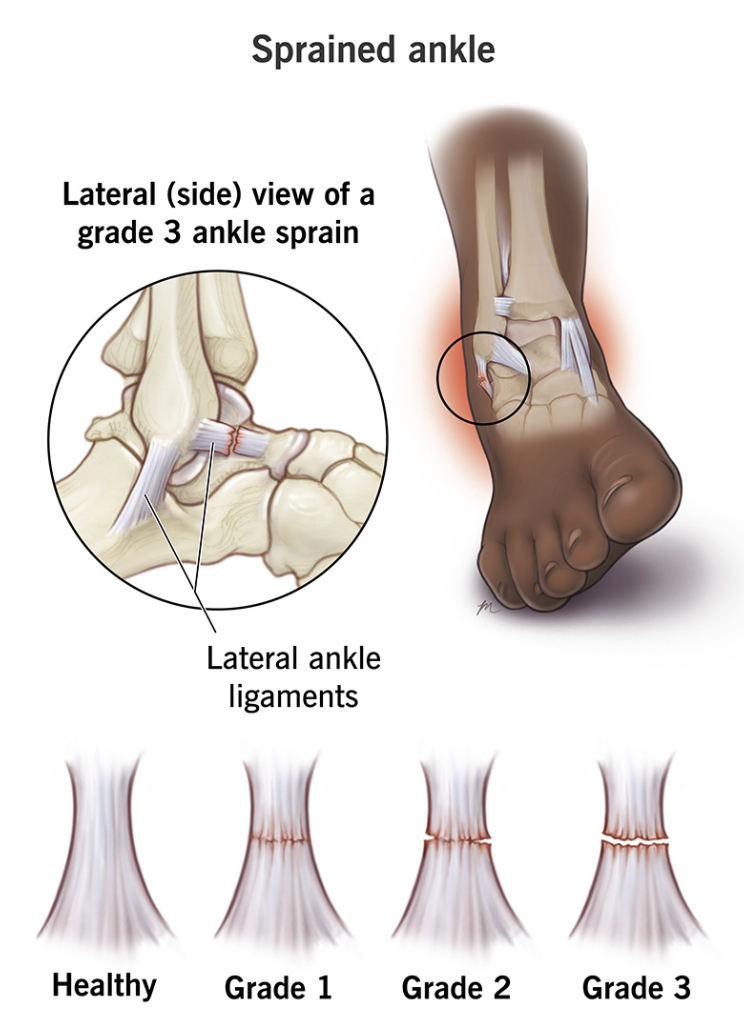
What Causes It?
Ankle sprains commonly occur during sports involving running, jumping, and quick changes of direction — netball, football, and basketball are common settings — but they happen just as often from simply stepping awkwardly off a curb, missing a step, or walking on uneven ground. A previous ankle sprain that hasn't been fully rehabilitated is one of the strongest risk factors for a repeat injury.
Common Symptoms
Pain and swelling on the outside of the ankle
Bruising that may develop over the following days
Difficulty or pain with weight-bearing, particularly in the first few days
A feeling of instability or the ankle giving way
Stiffness and reduced range of movement
How We Diagnose It
Assessment includes specific ligament stability tests, along with an evaluation of your ability to weight-bear and your overall range of movement. We'll also screen for signs suggesting a possible fracture, using established clinical guidelines to determine whether imaging is warranted. Most ankle sprains don't require imaging, and are assessed and managed clinically from the first visit.
How Physiotherapy Helps
Treatment follows a staged approach: protecting the ankle and managing swelling in the first few days, followed by early, guided movement and weight-bearing as tolerated, progressive strengthening, and finally balance and proprioception training before a graded return to sport or demanding activity. Early, appropriate movement generally leads to better outcomes than prolonged immobilisation, which is why we aim to get you moving safely as soon as possible.
Balance and proprioception work deserves particular attention, since this is one of the most well-supported ways to reduce the risk of re-spraining the same ankle. Skipping this stage, or stopping rehab as soon as pain settles, is one of the most common reasons ankle sprains become a recurring problem rather than a one-off injury.
Self-Care While You Wait For Your Appointment
In the first 48 to 72 hours, protecting the ankle, using ice for comfort, and elevating the foot when resting can help manage swelling. Gentle movement within a pain-free range, rather than complete immobilisation, is generally beneficial. If you're unable to weight-bear at all, or if pain and swelling seem disproportionate to the injury, seek prompt medical assessment to rule out a fracture.
Frequently Asked Questions
How long does an ankle sprain take to heal?
Mild sprains often improve within two to three weeks, while more significant sprains can take six to twelve weeks for a full, confident recovery, including the balance and strength work needed to reduce re-injury risk.
Do I need a scan for my ankle sprain?
Not always. We use established clinical criteria to determine whether imaging is warranted, and most sprains are assessed and managed without needing a scan.
Should I use a brace after an ankle sprain?
A brace can be useful for support during the early return to sport or activity, particularly for more significant sprains, though it's not a substitute for the strength and balance work that provides longer-term stability.
Why does my ankle still feel unstable months later?
Ongoing instability after the initial injury has settled is often related to incomplete balance and proprioception retraining, rather than the ligament itself. This is very treatable with the right targeted exercises.
Book an Ankle & Foot Assessment in Erina
If an ankle sprain is getting in the way of walking, training or work, the sooner it's properly assessed, the sooner we can get you moving with confidence again. Our Erina team will give you a clear diagnosis, an honest treatment plan, and a realistic timeframe — no guesswork, no generic exercise sheets.
Call Thrive Physiotherapy or book online today to get started.
Not sure if this is what's causing your ankle or foot pain? Visit our Ankle & Foot Physiotherapy hub page to see the full range of conditions we treat.