

Achilles Tendinopathy Physiotherapy — Erina & Central Coast
Stiffness and pain in the back of your ankle that's worst with your first steps in the morning, or at the start of a run, is a classic sign of Achilles tendinopathy. It's a common complaint in runners, particularly during periods of increased training, and while it can be a stubborn condition, it responds well to the right structured rehab.
What Is Achilles Tendinopathy?
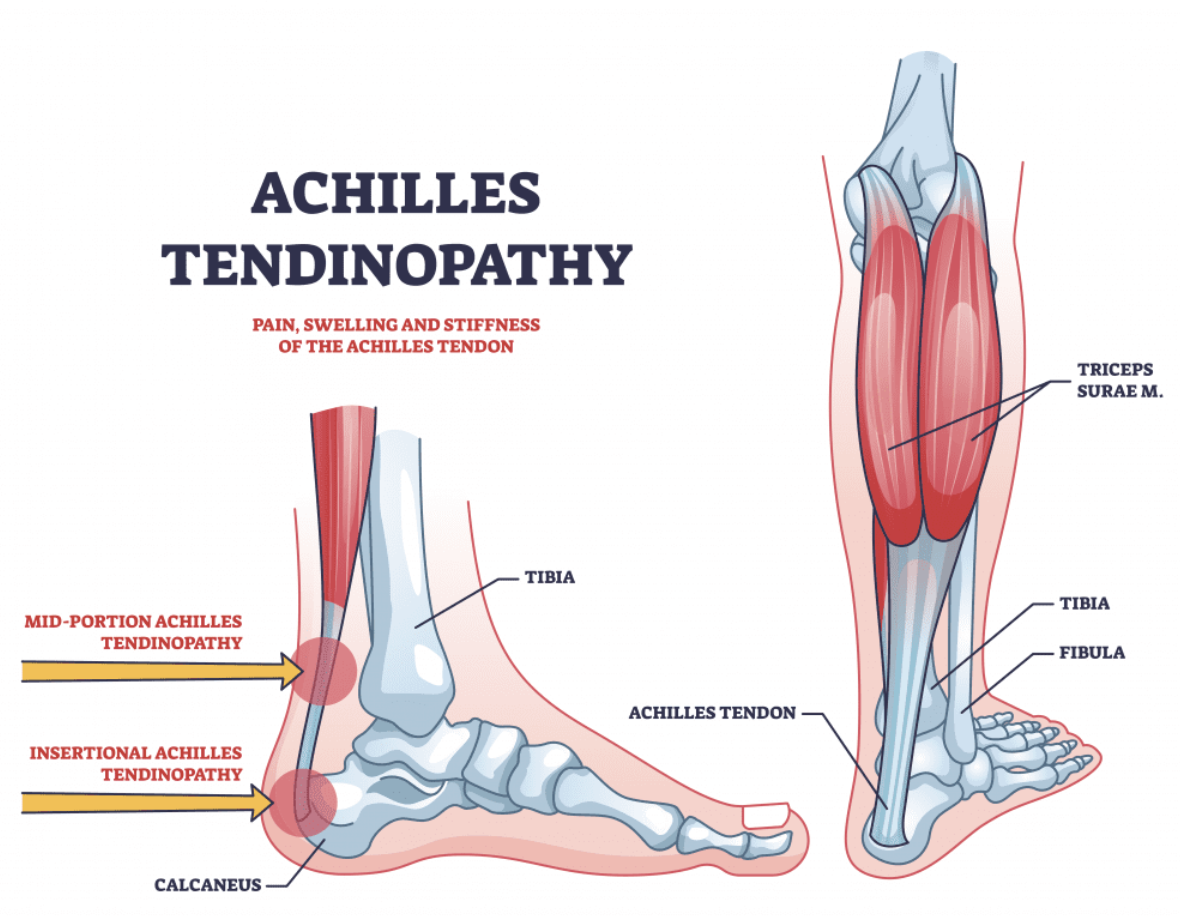
The Achilles tendon, the strongest and thickest tendon in the body, connects your calf muscles to your heel bone and takes on enormous load with walking, running, and jumping. Tendinopathy describes an overload injury to this tendon, where it's been asked to handle more than it can currently tolerate, leading to pain, stiffness, and reduced capacity rather than an acute tear.
It can affect different parts of the tendon — mid-portion tendinopathy occurs a few centimetres above the heel, while insertional tendinopathy occurs right where the tendon attaches to the heel bone. This distinction matters for treatment, since certain exercises and positions are better suited to one location than the other.
What Causes It?
Achilles tendinopathy is most commonly related to a sudden increase in running volume, intensity, or hill training, particularly during preseason or event preparation. Changes in footwear, a return to running after a break, and reduced calf strength or flexibility can all contribute to the tendon being overloaded beyond its current capacity. It's also seen in people who've had a recent significant increase in walking or standing activity outside of sport altogether.
Common Symptoms
Pain and stiffness in the Achilles, worst with first steps in the morning
Pain at the start of activity that sometimes eases with warming up
Tenderness and sometimes thickening of the tendon
Pain that worsens with hill running or sprinting
Discomfort that returns or worsens the day after activity
How We Diagnose It
Diagnosis is generally clinical, based on the location of your pain, your training history, and specific tests that load the tendon to reproduce your symptoms, such as calf raises. We'll also identify whether the tendinopathy is mid-portion or insertional, since this influences the specific exercise program we prescribe. Imaging isn't usually necessary to confirm the diagnosis.
How Physiotherapy Helps
Treatment centres on a progressive loading program specifically designed to rebuild the Achilles tendon's capacity, typically starting with isometric exercises to help manage pain, progressing through heavier strengthening work, and eventually into more dynamic, running-specific loading. The exact program is tailored to whether your tendinopathy is mid-portion or insertional, since certain positions can aggravate insertional tendinopathy in particular.
Managing training load throughout this process matters just as much as the exercises themselves. We'll work with you to find a sustainable balance between staying active and giving the tendon what it needs to rebuild capacity, since continuing to run at previous volumes on an under-recovered tendon is one of the most common reasons this condition drags on.
Self-Care While You Wait For Your Appointment
Reducing running volume and avoiding hill sprints or sudden increases in training in the short term will help manage symptoms. Gentle calf raises, kept within a comfortable range, may help, though it's worth confirming the right approach for your specific presentation at your assessment, since insertional and mid-portion tendinopathy sometimes respond differently to certain exercises.
Frequently Asked Questions
Can I keep running with Achilles tendinopathy?
Often yes, with temporary modification to volume and intensity. We'll help you find a sustainable training approach while the tendon rebuilds capacity.
How long does Achilles tendinopathy take to resolve?
It varies, but many cases take eight to sixteen weeks with a proper loading program, and more longstanding cases can take longer. Consistency with the loading program makes a genuine difference to outcomes.
Is stretching helpful for Achilles pain?
Stretching has a more limited role than many people expect, and can sometimes aggravate insertional tendinopathy specifically. Strengthening through a well-dosed loading program tends to matter more for genuine, lasting recovery.
What's the difference between mid-portion and insertional Achilles tendinopathy?
Mid-portion affects the tendon a few centimetres above the heel, while insertional affects the point where the tendon attaches to the heel bone itself. The two respond to slightly different exercise emphases, which is why an accurate diagnosis matters for your specific program.
Book an Ankle & Foot Assessment in Erina
If Achilles tendon pain is getting in the way of walking, training or work, the sooner it's properly assessed, the sooner we can get you moving with confidence again. Our Erina team will give you a clear diagnosis, an honest treatment plan, and a realistic timeframe — no guesswork, no generic exercise sheets.
Call Thrive Physiotherapy or book online today to get started.
Not sure if this is what's causing your ankle or foot pain? Visit our Ankle & Foot Physiotherapy hub page to see the full range of conditions we treat.