

AC Joint Injury Physiotherapy — Erina & Central Coast
A fall off a mountain bike, a hard tackle on the footy field, or months of heavy bench pressing can all lead to the same complaint — a sharp, well-localised pain right at the top of the shoulder. That's usually the acromioclavicular, or AC, joint, and it's one of the more straightforward shoulder injuries to identify once you know what you're looking for.
What Is an AC Joint Injury?
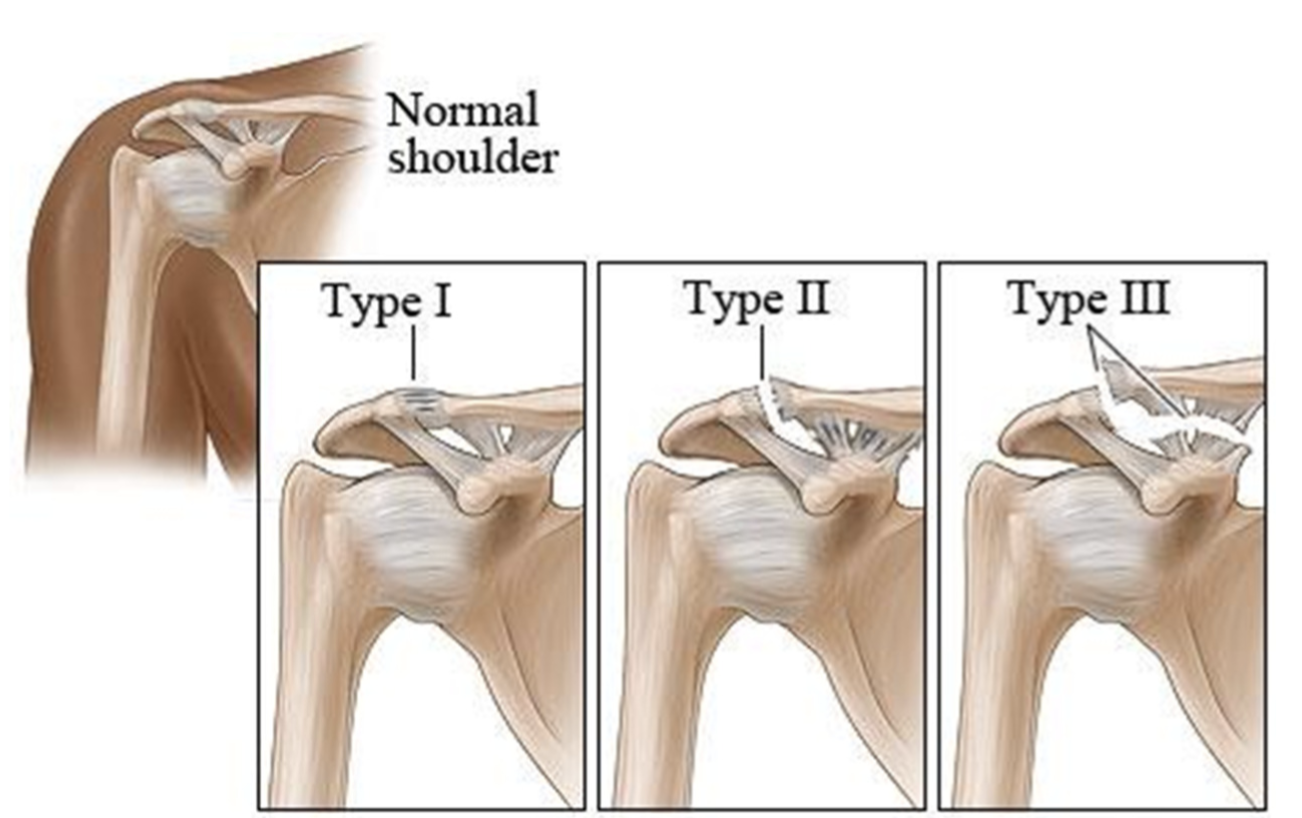
The AC joint sits where your collarbone meets the highest point of your shoulder blade. It's a small joint, but an important one for overall shoulder mechanics. Injuries here range from mild sprains of the surrounding ligaments through to more significant separations, where the ligaments are torn and the joint becomes visibly unstable. The severity is generally described in grades, from mild sprains through to complete ligament disruption.
It's a joint that gets relatively little attention compared to the rotator cuff or the main shoulder joint, but it plays an important supporting role in how force transfers through your shoulder during pressing and overhead movements. An AC joint that's healed with some residual instability can quietly limit strength and confidence in those movements long after the initial pain has settled, which is why we take the time to check it thoroughly even in seemingly minor cases.
What Causes It?
The two most common causes we see are a direct fall onto the point of the shoulder — common in cycling, football, and other contact or high-impact sports — and gradual overload from repetitive heavy pressing movements like bench press or dips. Occupations involving repeated overhead loading can also contribute over time, particularly when combined with poor technique or insufficient recovery between sessions.
Common Symptoms
Well-localised pain right at the top of the shoulder, over the bony bump of the joint
Tenderness to direct pressure on the area
Pain reaching across the body, such as doing up a seatbelt
A visible bump or step deformity in more significant injuries
Pain with pressing or pushing movements, particularly bench press or push-ups
How We Diagnose It
Assessment includes a close look at the joint itself, specific tests that stress the AC joint directly, and an evaluation of your overall shoulder movement and strength. For higher-grade injuries, particularly after a fall or direct impact, imaging is often appropriate to confirm the extent of ligament involvement and to rule out any associated fractures — we'll organise this promptly if your presentation suggests it's warranted.
How Physiotherapy Helps
For milder sprains, treatment usually involves a short period of activity modification, hands-on treatment to manage pain, and a progressive return to loading as symptoms allow. For more significant injuries, the process is longer and more structured, often starting with protecting the joint before gradually reintroducing strength work and overhead movement. In every case, we'll track your progress against expected milestones so you know whether you're on schedule or need a change of approach.
For higher-grade separations, we'll also discuss whether a specialist opinion is warranted, since some of these injuries benefit from surgical stabilisation while others do well with a well-run conservative program. Either way, physiotherapy plays a central role in restoring full strength and confidence in the shoulder once the initial injury has settled.
A key part of rehab for this joint is rebuilding trust in loaded, overhead positions — particularly for gym-goers keen to get back to bench pressing or athletes returning to contact sport, where a gradual, well-sequenced return to full load makes a real difference to long-term shoulder confidence.
Self-Care While You Wait For Your Appointment
In the first few days after a fall or knock, icing the area and avoiding pressing or overhead movements will help manage pain and protect the joint while it settles. A simple sling can be useful for comfort in more significant injuries, though we'll advise on how long to use one, since prolonged immobilisation isn't usually necessary and can slow down your broader recovery.
Frequently Asked Questions
Can I keep training with an AC joint injury?
It depends on the grade of injury and which movements are involved. Pressing and overhead movements are usually the first to be affected, while lower body training can often continue with minimal disruption.
Will my AC joint injury need surgery?
Most mild to moderate injuries recover well without surgery. More severe separations are sometimes referred for a specialist opinion, and we'll help guide that conversation if it's relevant to your situation.
Why does my shoulder still look bumpy after the pain has settled?
A visible step or bump can persist after some AC joint injuries even once symptoms have resolved. This is usually a cosmetic finding rather than a functional problem, though we can talk through your specific case at your assessment.
Book a Shoulder Assessment in Erina
If an AC joint injury is getting in the way of work, training or sleep, the sooner it's properly assessed, the sooner we can get you moving normally again. Our Erina team will give you a clear diagnosis, an honest treatment plan, and a realistic timeframe — no guesswork, no generic exercise sheets.
Call Thrive Physiotherapy or book online today to get started. Not sure if this is what's causing your shoulder pain? Visit our Shoulder Physiotherapy hub page to see the full range of shoulder conditions we treat.